
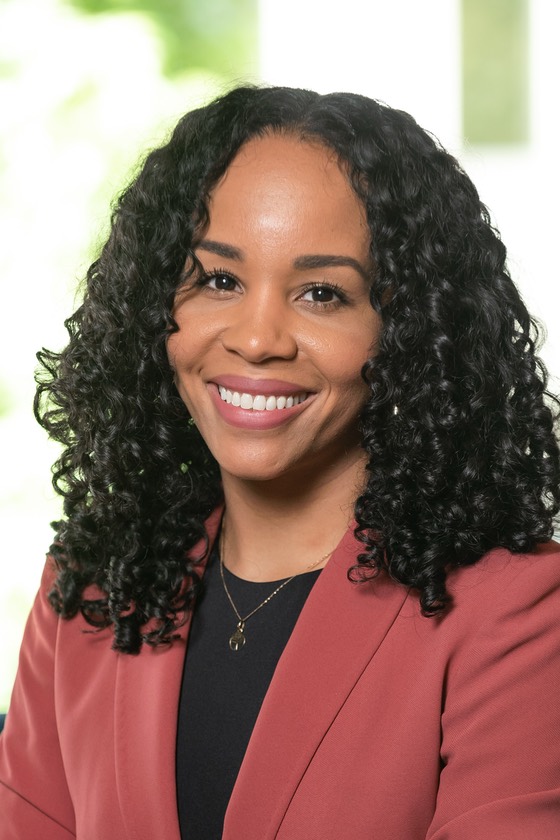
Andrea M. Headley
Connect with Andrea
About Andrea
Headley's research focuses on criminal justice management and policy, with a keen focus on racial equity. Overarching themes in Headley's writing include assessing police-community relations, analyzing dispositional outcomes in citizen complaints, evaluating the effects of race during use of force encounters, as well as evaluating body-worn cameras. Headley serves government and nonprofit organizations consulting and providing advising on equitable policies, practices, and programs.
Contributions
Police Use of Force Policy Reform
In the News
Publications
Conducts a large-scale, nationwide causal analysis of the effects of body-worn cameras (BWC) in the United States (US) and employs a staggered difference-in-differences (DiD) approach using 12 years of panel data (2008–2019) covering 697 local police agencies. Finds that BWC adoption had no significant effect on White arrests but led to an approximately 5.5% decrease in Black arrests.
Links 3 years of individual educational and disciplinary infraction records to juvenile justice system records to identify the effect of juvenile justice referrals for school-based offenses on academic and behavioral outcomes. Finds that, even for the same offense type and circumstance, relative to students only punished internally in the school, students referred to juvenile justice experience lower academic achievement and increased absenteeism, and are more likely to be involved in future disciplinary infractions and juvenile system contact.
Draws upon 88 in-depth, semistructured interviews on collaboration (and its limits) between the police and community in Hartford, Connecticut to highlight the limits of collaborative community policing with regard to resources, reach, expectations, implementation, and power balances.
Aims to (1) assess the relationship between a trauma-informed organizational climate (TIC) and burnout; (2) analyze the moderating effect of TIC on role strain and burnout; and (3) identify how a TIC can mitigate contributors to burnout.
Finds that representation on the police force is negatively associated with police use of force; however, there is a stronger effect of minority representation on use of force when the department also has a civilian review board, supporting contingency effects.
Examines the racial inequities that exist in policing, the reasons for such inequities and what can be done about them.
Analyzes police use of force data from Indianapolis and Dallas police departments to explore differences in the amount of force used by officers in ethnic, racial, and gender matches in police–civilian encounters. Suggests that there are heightened levels of force used when there is racial and gender incongruence or mismatch between the officer and the civilian, particularly White officers interacting with Black civilians.
Applies qualitative research method to explore gendered processes that women city managers and police officers encounter in their their day-to-day leadership and street-level bureaucracy roles.
Reviews the national police reform commissions that have occurred in the United States. Finds three areas of similarities across reform recommendations: excessive police use of force, police–community relations, and personnel standards. Highlights the need for further research to examine what works for reducing police–community tension.
Evaluates the impact of a body-worn camera program used by the Hallandale Beach, Florida Police Department in the U.S. to determine their impact on police officer behavior and perceptions. Findings revealed that officers with BWCs 1) relied on less intrusive methods to resolve incidents, 2) continued to be active rather than abstaining from community contact, and 3) officer perceptions of the usefulness of BWCs remained pessimistic.