
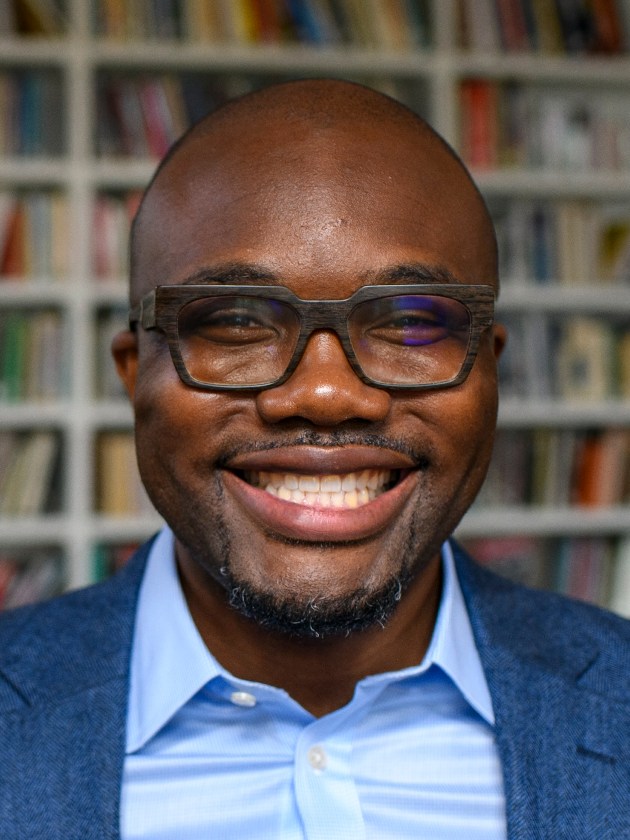
Chika O. Okafor
Connect with Chika
About Chika
Okafor’s research lies at the intersection of law, economics, and public policy. He integrates economic theory, empirical analysis, and legal analysis to uncover mechanisms of—as well as inform solutions to—socioeconomic inequality. Okafor is a justice scholar. As such, overarching themes in his writings include economic justice, criminal justice, and environmental justice. In addition to his role as Assistant Professor of Law at Nortwestern University, he also holds dual courtesy appointments in the Economics Department and the Kellogg School of Management, and is a Faculty Fellow at the Institute for Policy Research. Okafor is an ex-McKinsey consultant and a public policy practitioner with local experience in the Chicago Public Schools, national experience in the NAACP LDF, and international experience in the European Court of Human Rights and the U.S. Holocaust Memorial Museum’s Simon-Skjodt Center for the Prevention of Genocide.
Contributions
Equal rules don’t produce equal opportunity
The Myth of Colorblind Fairness
Building the Next Pro-Life Movement
In the News
Publications
Develops an economic model in which firms are colorblind in hiring and show that—despite initial equality in ability, employment, wages, and network structure—minorities receive disproportionately fewer jobs through referral and lower expected wages, simply because their social group is smaller. Concludes this is a phenomenon of "social network discrimination."
Argues that the Supreme Court’s rejection of race-based affirmative action ignores social network discrimination—a new concept showing minorities can face disadvantages due to smaller social networks.
Compiles data on the election cycles of district attorneys (DAs) in office during the steepest rise in incarceration in U.S. history. Finds that being in a DA election year increases admissions rates and time sentenced. Discovers criminal sentencing may be responding to voter preferences, highlighting a need to focus on public opinion—not just policy—in stemming mass incarceration.
Proposes a major shift in the messaging of the mainstream environmental movement. Stresses instead of relying on logic, the mainstream movement must also cultivate passion. Mentions instead of only appealing to the mind, it must also tap into the heart, and instead of “convincing” people, it must also learn to inspire them. Finds what inspires is a moral imperative, which can be accomplished through religious justifications.