
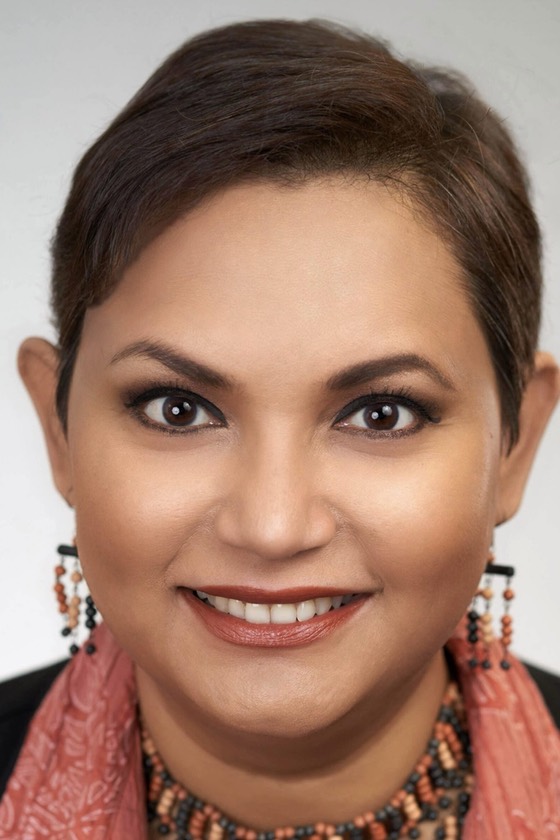
Farhana Sultana
Connect with Farhana
About Farhana
Sultana is an internationally recognized and award-winning interdisciplinary scholar, speaker, educator, and author in environmental politics, water governance, climate justice, international development, human rights, decolonizing knowledge, and transforming systems. Prior to joining Syracuse, she taught at King’s College London and worked at United Nations Development Programme (UNDP). Author of over a hundred publications, her books include “Confronting Climate Coloniality: Decolonizing Pathways for Climate Justice” (2025) and “Water Politics: Governance, Justice, and the Right to Water” (2020). Her work has been highlighted in Nature, New York Times and many other outlets.
Contributions
No Jargon Podcast
In the News
Publications
Provides clear explanations of and insights into tackling how legacies of colonialism, resource extraction, geopolitical inequities and social injustices have shaped the causes of the climate crisis and shape its responses at global and local levels. Challenges readers to look beyond just emissions and focus on how power operates: who benefits, who decides & who benefits. Examples from around the world are given.
Develops the plural climate storylines framework to complement existing physical climate storylines, which have strengthened the usability of climate projections yet struggled to generate action for just climate futures.
Looks at the wide array of public-facing work that geographers do, the public intellectual work of educating the public, informing policymaking, collaborating with diverse constituents, having far-reaching impacts beyond academia and policy into radical changes on the ground in meaningful change. Exemplars are provided by different scholars working on different topics.
A reflective piece about how safe water access around the world is not just about available quantities of water or policies of water management, but about ensuring access, justice, and listening to communities.
Examines the geopolitics of planetary environmental injustice and the imperative for systems change to address the intertwined crises of climate breakdown and unsustainable economic growth. Argues that climate breakdown has heightened attention to uneven anthropogenic use and abuse of the planet's biosphere and common pool resources and offers alternate pathways for flourishing.
Provides clear definition and actionable points on climate justice. Argues that climate justice is about paying attention to how climate change impacts people differently, unevenly, and disproportionately, as well as redressing the resultant injustices in fair and equitable ways.