
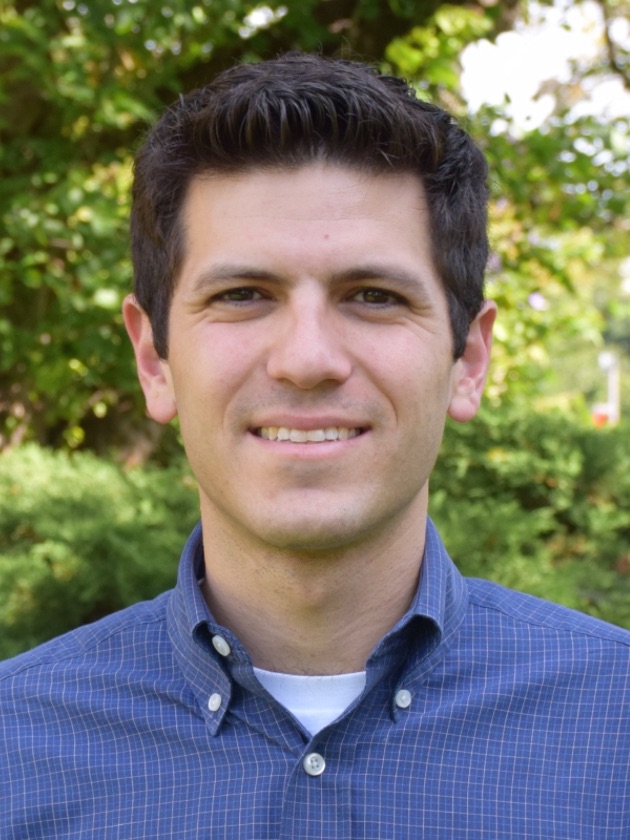
Joshua A. Basseches
Connect with Joshua
About Joshua
Basseches’ research focuses on energy and climate policy and politics in the U.S. states. He examines the roles of business interests, environmental and consumer advocacy organizations, and state-level policymakers in shaping the content of the policies that have emerged. He has also been involved in research projects on business-government relations and state-level incarceration and criminal justice policy.
Contributions
In the News
Publications
Examines how the ownership structure of the U.S. electricity grid shapes state renewable energy policies, drawing on 25 years of policymaking across seven states. Finds that investor-owned utilities often play a decisive role in shaping clean energy rules in ways that can advance environmental goals while also protecting corporate profits, suggesting that who controls the grid matters as much as partisan politics in determining the pace and direction of the clean energy transition.
Examines how the public reacts to different climate policy designs—specifically comparing regulatory approaches with pricing-based mechanisms. Results suggest that policymakers shouldn't avoid pricing strategies based on presumed public opposition and instead consider a broad mix of approaches to address climate change.
Examines how subnational (state and provincial) governments in the United States and Canada have historically led climate action through policy changes. Provides insight into the politics that have produced this climate leadership, including the role of interest groups and social movement organizations, while also arguing that subnational efforts—especially in key areas like electricity governance—are nearing their limits.
Addresses the lack of comprehensive data on interest groups’ policy preferences in state legislatures by introducing the Dataset on Policy Choice and Organizational Representation in the United States (CHORUS). Details the construction of CHORUS and introduces a novel network science method—the layered stochastic block model—which groups similar interest groups and bills together, respectively, based on patterns in the policy positions.
Highlights the need for qualitative case studies in examining state-level public policy and politics in the United States. Proposes a three-stage approach for researchers to conduct qualitative case study research effectively, and underscores the value of qualitative research in gaining comprehensive insights into state-level policy-making processes and outcomes.
Shows how a two-dimensional framework attentive to the economically motivated preferences of business actors explains policy design. Finds that business preferences were fragmented, but that a single type of private actor, investor-owned utilities, ultimately prevailed in achieving their preferences in every case.
Reviews the political structures and interest groups that slow action, and we examine emerging tensions between climate justice and the technocratic and/or market-oriented approaches traditionally taken by many mainstream environmental groups. Suggests strategies for overcoming opposition to climate action that may advance more effective and inclusive state policy, focusing on political strategies, media framing, collaboration, and leveraging the efforts of ambitious local governments.
Draws on legislative and regulatory texts, archival material, and interviews with relevant political actors to compare the policymaking influence of each of these coalitions, and argues that the composition of the two coalitions is the key to understanding why one was more successful than the other. Points out the justice-oriented coalition’s growing power, as market-oriented SMOs while seeking to point out the justice-oriented coalition’s growing power, as market-oriented SMOs seek to preserve their legitimacy.
Compares the efforts of social movement organizations to shape two state bills addressing climate change. Examines differences in political context that can create additional obstacles to movement success.