
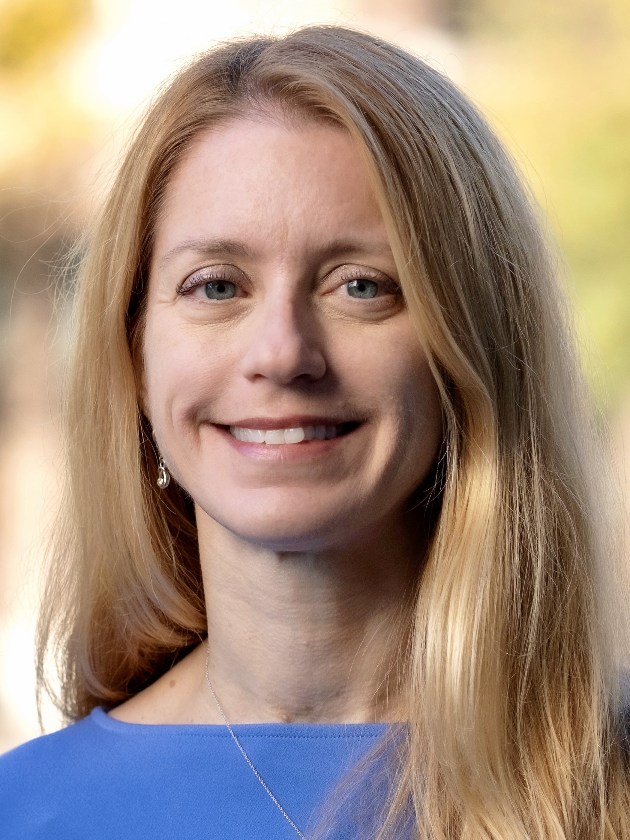
Karen Benjamin Guzzo
Connect with Karen
About Karen
Guzzo is a family demographer and sociologist, and she serves as Director of the Carolina Population Center and is a Professor of Sociology at the University of North Carolina at Chapel Hill. Her area of specialization is childbearing goals, behaviors, and trends in the U.S. Dr. Guzzo’s research has been funded by the NIH and NSF. She has served on the boards of the Population Association of America, the National Council of Family Relations, and several demographic and family academic journals.
Contributions
In the News
Publications
Investigates how subjective perceptions influence short-term fertility intentions in the U.S. Finds that while most adults don’t plan to have a child soon, life satisfaction increases the likelihood of intending to, and economic stress raises uncertainty.
Examines why U.S. birth rates remain low despite widespread cultural norms favoring two-child families. Finds that many adults delay pregnancy due to economic pessimism and relationship concerns, suggesting short-term avoidance—not a rejection of parenthood—may be driving lower fertility.
Explores how different types of uncertainty—about having children, achieving fertility goals, and the strength of those goals—affect fertility decisions in the U.S. Finds that many women who intend to have children are unsure they'll follow through. Findings highlight the growing role of uncertainty in shaping fertility patterns.
Examines whether declining U.S. fertility rates are due to changing goals or increasing difficulty in achieving them. Finds that most people still intend to have around two children, and childlessness remains uncommon. The decline appears driven by delayed childbearing and a growing gap between intended and achieved fertility rather than shifting fertility goals.
Examines how socioeconomic and psychological factors influence women’s fertility intentions and outcomes before, during, and after the Great Recession. Finds that more advantaged women were more likely to intend to have and have children, and that mothers were more likely than childless women to have additional children post-Recession.