
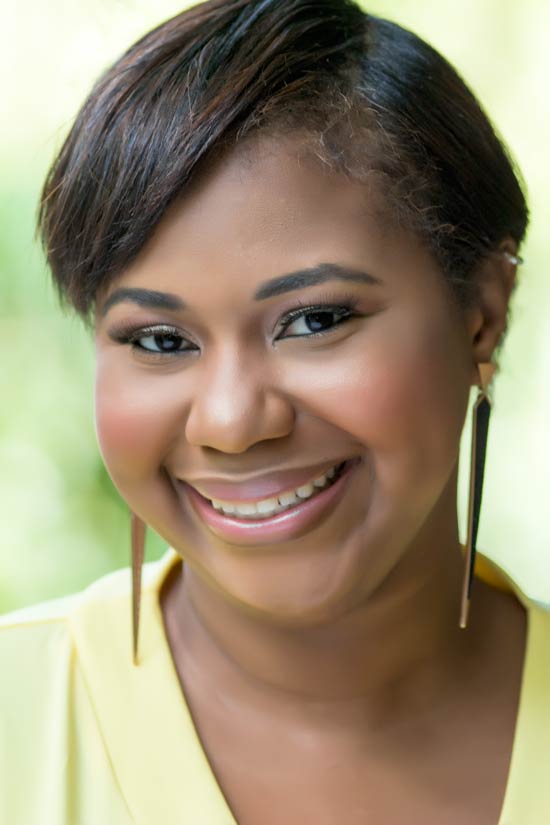
LeConté Dill
Connect with LeConté
About LeConté
Dill's research focuses on addressing health inequities and fostering protective factors among urban Black girls and other youth of color. Overarching themes in Dill's writings include violence prevention, resilience, and wellness. Using qualitative and arts-based research methods, Dill has a commitment to transdisciplinary research. Guided by Black Feminist epistemologies, her recent scholarship examines police violence as a public health issue. Dill was a Fellow at the Democratizing Knowledge Institute, Callaloo Creative Writing Workshop, Burch Minority Leadership Development Program, and Public Health Critical Race Praxis Institute.
Contributions
In the News
Publications
A collection of persona poems where three Black girl storytellers take the reader along journeys through Oakland, Atlanta, and Brooklyn, respectively. Informed by 15 years of the author’s community-engaged research in and with urban neighborhoods and the young people and organizations there.
Presents a teaching guide (syllabus) designed to help people better understand how schools push some students—especially Black girls—out of the education system and why that matters beyond just education. Argues that this issue is tied to broader inequalities (including health and well-being) and encourages more awareness, conversation, and action to better support these students.
Describes a model for teaching, research, and public health work that centers the knowledge and leadership of marginalized communities while challenging traditional, top-down academic approaches. Argues that creating collaborative, community-driven spaces can lead to more meaningful learning, stronger partnerships, and more just, real-world impact..
Examines what happens when partnerships between researchers and community groups break down—using the idea of “beef” to describe conflict—and reflects openly on real tensions, miscommunication, and mismatched expectations in one project. Finds that these conflicts are not failures to hide, but important moments to learn from, and that honest reflection and recommitment can lead to more accountable, equitable collaborations.
Explores how Black girls resist everyday forms of racism and control by creating their own spaces, identities, and ways of surviving and thriving. It argues that these acts—often overlooked—are powerful forms of resistance and self-determination happening “in plain sight.”
This article offers "participatory narrative analysis" as a method for engaging and empowering research participants as co-researchers of study themes relating to their own lives. The article presents poems-as-data and provides examples of this poetry.
This article centers Black Feminist theory as essential in public health research and practice. The article introduces a special issue of a journal focusing on Black girls' and women's health.
Demonstrates how a community-based organization supports young people in leveraging educational and professional networks.
This paper examines Black girls' use of poetry to understand and heal from dating violence.
This article examines the role of spirituality, not religion, in the lives of urban Black youth. Participants in the study detail how they rely on dimensions of spirituality as coping mechanisms.
This article describes how queer migrants and asylum seekers in Johannesburg, South Africa engage in poetry writing to make sense of their daily lives. The poetry created and described explore themes of migration, xenophobic and homophobic violence, and citizenship and citizen-making.