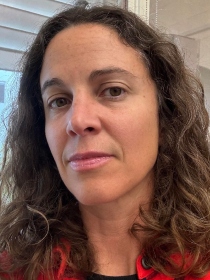
Profile picture for user MeganThiele Strong

Megan Thiele Strong

Professor, Department of Sociology and Interdisciplinary Social Sciences, San José State University

About Megan

Thiele Strong (she/they) holds a doctorate and has 20 years of experience teaching a breadth of courses, including environmental sociology, quantitative methods, sociology of higher education and poverty, wealth and privilege. She researches at the intersections of social and environmental justice, mental health and education. They know we are meant to queer the status quo in order to be diverse, equitable, sustainable, creative and inclusive. Thiele Strong is a Public Voices Fellow at TheOpEdProject.

In the News

Opinion: "Social Impact Majors Deserve Better Careers: Universities Know It and the Public Needs It," Megan Thiele Strong (with Yolanda Wiggins), Local News Matters, October 11, 2025.
Guest on Fulcrum Roundtable, July 20, 2025.
Opinion: "The Care and Feeding of a Superpower," Megan Thiele Strong, The Fulcrum, March 23, 2025.
Opinion: "Trump Who? We Live in Musk’s World Now," Megan Thiele Strong, The Hill, November 20, 2024.
Opinion: "DEI Doesn’t Mean White People Should Feel Guilty. It’s a Call for Us All to Speak Out," Megan Thiele Strong, The Kansas City Star, July 31, 2024.
Opinion: "It’s Not Just Harrison Butker. Benedictine College Perpetuates Traditional Roles.," Megan Thiele Strong, The Chicago Tribune, May 30, 2024.
Opinion: "Protect More Than Women’s Bodies on Campus," Megan Thiele Strong, Ms. Magazine, May 21, 2024.

Publications

"School Resources and Teen Suicide Risk, 1991–2016: A Longitudinal Analysis at the State Level" (with Javier Corredor). International Journal of Social Economics (2025).

Addresses the gap between research that shows that teachers’ salaries influence educational and non-educational outcomes and the lack of studies that explore whether teacher compensation patterns correlate with student mental health outcomes. Asks whether, at the state level, the average K-12 teacher salary predicts teen suicide risk.

"Resource or Obstacle?: Classed Reports of Student–Faculty Relations" The Sociological Quarterly 57, no. 2 (2016): 333-355.

Explores the relationship between undergraduate students' class-based cultural capital and their facility in developing relationships with faculty. Reveals that lower- and middle-class students tended to inadvertently opt out of this key relational opportunity.