
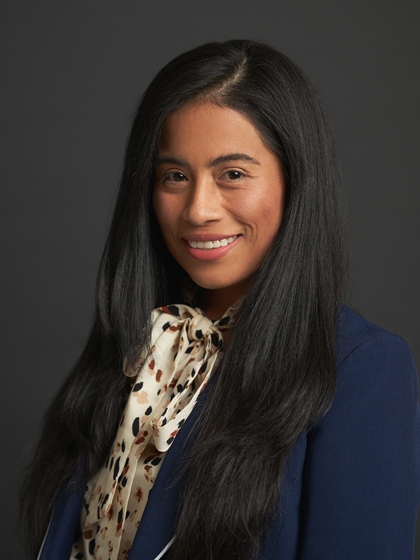
Raquel Muñiz
Connect with Raquel
About Raquel
Muñiz's research focuses on students who have experienced substantial adversity, specifically examining the conditions, strategies, and mechanisms that shape the creation and implementation of law and policy. Overarching themes in Muñiz's current writings include a focus on how the use of research evidence can serve as a strategy for legal actors and others in the legal system, aiding their decision-making and potentially leading to more equitable laws and policies. Muñiz serves as a consultant on education policy issues in practice, with a focus on educational equity.
Contributions
The Silencing of a Generation of Academics
In the News
Publications
Analyzes how organizations and experts contribute knowledge and shape public discourse surrounding the Deferred Action for Childhood Arrivals (DACA) policy. Demonstrates that participants in these debates often balance advocacy with credibility, helping influence policy discussions by presenting information in ways that are persuasive while remaining broadly acceptable across different audiences.
Explores how educational policymakers and practitioners can use knowledge to address inequities and better serve diverse communities. Argues that effective educational decision-making requires not only using evidence but also critically considering whose perspectives are represented and how policies affect marginalized groups.
Examines how reduced administrative authority following the Loper decision may affect the development and implementation of education policy. Suggests that limiting the power of federal agencies could create greater uncertainty in educational policymaking and increase the influence of courts in shaping education policy outcomes.
Considers how the legal and policy changes following the Dobbs decision may affect education and the work of educational researchers. Emphasizes that stronger engagement between educational research, the courts, and policymakers is necessary to ensure that evidence informs decisions with significant consequences for students and communities.
Investigates how education laws and policies during the COVID-19 pandemic affected students' access to educational opportunities. Demonstrates that the pandemic exposed and intensified existing educational inequities, with vulnerable student populations facing greater barriers to learning and support.