
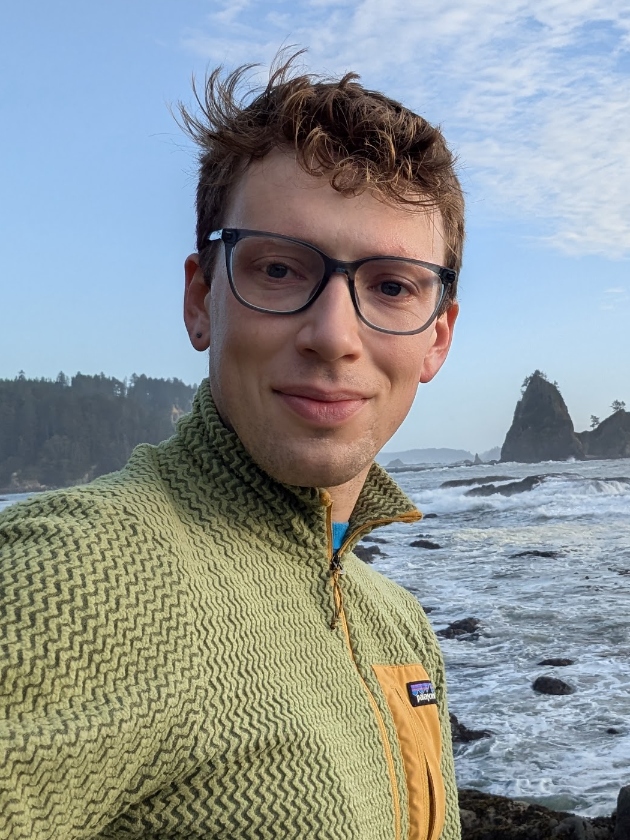
William Agnew
Connect with William
About William
Agnew’s research uses audits, human subjects research, and critical analysis to predict and understand the impacts of AI on the world. To mitigate harms and broaden the benefits his work surfaces, Agnew conducts research in partnership with policymakers, civil society, and impacted communities to identify and close gaps in knowledge blocking progress. Finally, Agnew develops technical tools that can be used by broad audiences to mitigate AI harms. Agnew's work has been supported by grants from the Ford Foundation, MacArthur Foundation, UK AI Security Institute, Luminate Foundation, and CBI and NDSEG fellowship.
Contributions
Regulating AI Chatbots Used for Therapy and Emotional Support
In the News
Publications
Investigates the link between computer vision research and mass surveillance, revealing that the field is deeply intertwined with technologies that enable the monitoring and targeting of human bodies.
Investigates the use of large language models to replace mental health providers. Reviews established therapy guidelines and tests current LLMs like GPT-4o and finds that LLMs fail to meet key aspects of effective therapy. Concludes that LLMs should not replace therapists, and discusses alternative roles for LLMs in clinical therapy.
Investigates the contents of web-scraped data for training AI systems, at sizes where human dataset curators and compilers no longer manually annotate every sample. Provides concrete evidence to support the concern that any large-scale web-scraped dataset may contain personal data.
Examines the values embedded in machine learning research by analyzing 100 highly cited papers from ICML and NeurIPS. Findings show that few papers connect their research to social needs or discuss potential harms.
Provides some of the first documentation for the Colossal Clean Crawled Corpus, a dataset created by applying a set of filters to a single snapshot of Common Crawl. Examines where the data comes from and assesses the effects of C4’s filtering process.