

Immigrants are an integral part of America’s past, present, and future. They are members of local communities. Immigrants are parents and grandparents of many U.S. citizens. Most have been here for years and are part of mixed-status families, where one or more members may be undocumented. Immigrants are crucial to the U.S. economy. Most of what immigrants earn is spent on rent, groceries, services, and transportation.
Despite their deep roots in U.S. communities and significant economic contributions, immigrants are still targeted by policies that place undue financial burdens on them. One example is found in the current text of the “One Big, Beautiful Bill Act,” which includes a provision to tax remittances by 3.5%. Remittances are the money that immigrants send to their families in their place of origin. Remittances are most likely to come from the wages that immigrants earn through their hard work, for which the great majority have already paid taxes.
Rather than penalizing immigrants for supporting their families abroad, Congress should remove the remittance tax provision from the bill and focus on policies that recognize and strengthen immigrants’ economic and social contributions to the United States.
The Economic and Practical Flaws of a Remittance Tax
Beyond the issue of double taxation, since workers have already paid income taxes, a tax on remittances may not generate sufficient revenue to make administering and enforcing the program worthwhile. Many would choose to simply avoid this taxation by sending the money through informal means or traveling themselves. Furthermore, taxing remittances would not be enough to change people's decisions about immigrating or returning. Immigrants already pay between 3 and 6% of what they send in fees to (mostly U.S.-based) businesses such as Western Union that help facilitate these transfers.
Remittances are direct evidence of the many contributions that immigrants make to the U.S. economy. These transfers come from wages earned through the production of ideas, art, goods, and services. In 2023, those who sent remittances contributed over $2.7 trillion, which is 10% of the U.S. GDP. Remittances, in turn, represent only 3.5% of all the wealth created by immigrant workers in the U.S., underscoring how much more immigrants give to the U.S. economy than they send abroad.
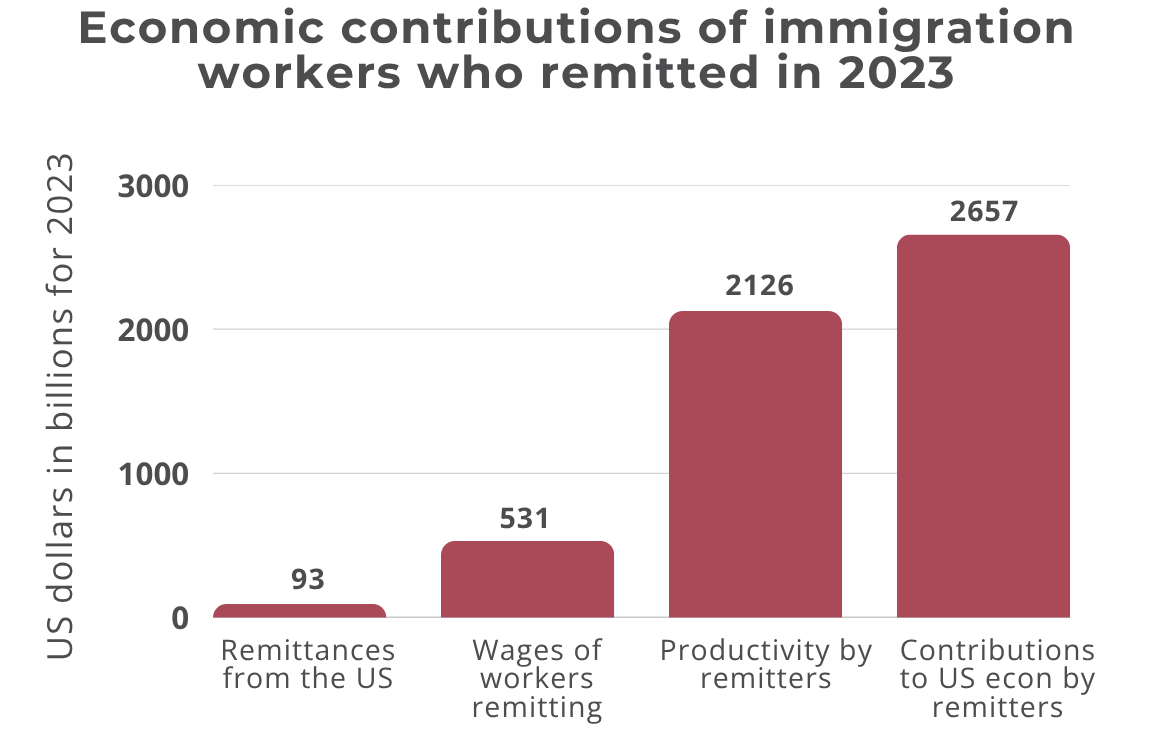
Immigration constitutes an investment in human capital and economic resources. For example, when a working-age person who earns the minimum wage in both countries is deported from the U.S. to Mexico, Mexico loses around $4,200 in remittances but could gain around $22,613 yearly in wealth by adding another much-needed worker. If the U.S. deports 5 million Mexican citizens and some of their adult U.S.-citizen or third-country family members, Mexico could gain $113 billion, which is almost double the $63 billion remitted to Mexico in 2023.
What Can Congress Do?
Taxing remittances is counterproductive. Instead of implementing such a harmful tax, Congress should pursue policies that support immigrant integration and family stability. This includes:
- Removing the remittance tax provision from the “One Big, Beautiful Bill Act” and opposing similar efforts in future legislation.
- Implementing amnesty programs and creating new pathways to citizenship, which would help ease family reunification and support immigrant integration. Such policies would reduce mixed-status families, increase tax revenues over time, and improve physical and mental health for all U.S. residents.
- Investing in programs that support family reunification, such as increasing legal immigration slots for family-based petitions and reducing visa backlogs.
- Ensuring tax equity by recognizing that most immigrants, regardless of status, already pay into the U.S. tax system through income, sales, and payroll taxes.
Taken together, these actions would strengthen communities, enhance national security through stability and inclusion, and increase long-term tax revenues by ensuring immigrants can work, thrive, and support their families without unnecessary penalties.