
Disclaimer: This transcript was generated using AI-assisted transcription. While we strive for accuracy, it may contain errors or omissions.
Lisa: Hi, I'm Lisa Hernandez.
Avigail: And I'm Avigail Oren.
Lisa: And we are your hosts for Scholar Strategy Network's No Jargon. Every other week, we will discuss an American policy problem with one of the nation's top researchers without jargon.
Avigail: So Lisa, for this episode, you spoke to someone about pregnancy and postpartum and how to support moms. This is an issue that is very near and dear to me at this season of my life, if you will, because I have an 18-month-old who brings me a lot of joy but is also, to put it mildly, resource intensive.
Lisa: Right. Expensive care resources. Certainly. Yes. Not only is it a topic that is near and dear to your heart, but it is physically near you. So this is very exciting. We're talking about the Philly program in which folks are distributing cash to expecting mothers. So definitely something that as I was chatting with this amazing researcher, I was like, oh my gosh, Avigail is going to love this conversation. So I'm happy that we get to banter about it. Yeah.
Avigail: So for listeners who don't know, I'm based in Pittsburgh, which is on the other side of the state of Pennsylvania and not so easy to get to. It's like a 4 to 5 hour drive, depending where you're going in the city of Philadelphia.
But we, you know, it's the same state. We have the same politics that we're dealing with, both being blue cities in a sort of purple state. Things that are piloted or work in Philly often are able to be ported over to Pittsburgh. And I would love to see a program like the Philly Joy Bank brought to Pittsburgh.
Lisa: Absolutely. And you know, you definitely have steel hearts and minds, and hopefully this is something that can be replicated. And we definitely, it was really exciting to get to talk about what replication could look like.
Like what does the program look like right now? What does it look like in other cities? So it feels really great to be able to connect with an expert on pregnancy and also to just like talk about Philly specifically and the needs of people there.
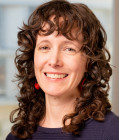
So for this episode, I spoke with Ali Groves, an associate professor at Drexel University and a research chair at the Mother and Infant Cash Coalition. Her work focuses on social policies and programs and how they promote reproductive justice. Here's our conversation.
Hi, Professor Groves. Welcome to No Jargon.
Ali: Hi, thank you so much for having me.
Lisa: Today we're really going to get to talking about pregnancy. And when I think about pregnancy, and I'm sure a lot of the listeners as well, they think about something that happens to one person or a family, but your work looks at pregnancy through this broader lens. So I want to talk about that lens that you share and why should think about pregnancy as something that society should be supporting?
Ali: That's such a great starting question. Thank you. I think that we should think of pregnancy as a broader social issue and not just a family matter, because while pregnancy might start as like a personal experience that a person is having, it doesn't stay contained there.
And so if we talk about it like it's just a private choice, we miss how much it shapes the whole world around us. And what I mean by that is that healthy pregnancies and births strengthen communities. And when support systems fall short for pregnant folks, everybody feels the ripple effects.
And so the ability to carry a pregnancy safely and affordably depends on the structures that you and I and all of us live inside. It's not just individuals. Families and pregnant people don't operate in a vacuum. They're connected to the whole social ecosystem.
So yeah, pregnancy is personal, but the impact of it is shared.
Lisa: You know, one of the examples that you have shared within your work and you've written about is a program in Philadelphia, the Philly Joy Bank.
So for listeners who may not have heard about this, could you share a little bit about the program and how it works?
Ali: The Philly Joy Bank is a program that I am privileged to be leading the coeval— co-leading the evaluation of it. And the Philly Joy Bank itself was started by a community coalition here in Philadelphia that was comprised of stakeholders from all sectors in the city.
They designed it in response to high financial stress among expectant parents in Philadelphia. There had been a survey that parents had completed, and in that survey, it showed that financial stress was the top stressor that pregnant individuals were facing during pregnancy.
And so this community coalition said, we wanna reduce financial distress during this time. Let's come up with a program to do just that.
That community coalition looked around the country and saw that there was some growing interest in what is called guaranteed income programs or cash transfers. And they thought this might be a really great way to reduce financial stress for expecting individuals and parents in Philadelphia.
And so that community coalition created a steering committee that was again comprised of lots of stakeholders, medical experts, policymakers, people from the Department of Public Health, and then also, really importantly, lived experience experts.
So pregnant folks, folks who had been pregnant, who had experienced challenges affording a baby during and after pregnancy. That steering committee itself actually designed the Philly Joy Bank.
And the Philly Joy Bank itself is a program that provides selected participants with $1,000 a month starting in the second trimester of pregnancy and lasting until 12 months postpartum.
And all people who apply to the Philly Joy Bank are also eligible to receive other care services through the Philadelphia Department of Public Health.And so what that is, is that includes programs like doula support, breastfeeding support, sleep support, and then financial counseling.
Lisa: That sounds fantastic. And I, I really want to ask about, like, what does the income eligibility look like? You mentioned the selected people within the program. Like, how are they selected for this?
Ali: Yeah, that's such a great question. Um, and I'll stop saying that in response to every single one of your questions.
Um, so yeah, the eligibility requirements for the Philly Joy Bank are that you live in one of the— they started piloting this program in 3 neighborhoods in Philadelphia, and these are 3 neighborhoods that have the very worst birth outcomes in Philly.
And then in terms of setting up other eligibility requirements, people who are applying to the Joy Bank had to be in the second trimester of pregnancy in order to be eligible for it.
And that was just to mitigate against the possibility that, you know, that somebody might lose their pregnancy and/or terminate their pregnancy in the first trimester.
And then the income requirements are that individuals have to attest to making less than $100,000 a year. And the steering committee came up with that amount based on income calculators that show that that is actually what is needed to live in Philadelphia for a family of 4.
So while that might sound high to people, I can also tell you that the median income of our participants or people who have applied to the program is significantly lower than that. It's closer to about $16,000 or $17,000 a year.
Lisa: You mentioned that people come from areas that have worse pregnancy outcomes. What are the types of pregnancy outcomes that are usually kind of the pointer to, to this?
Ali: So the, the primary outcomes that they were looking at were low birth weight and also looking at preterm birth, which is having a baby before 37 weeks gestation.
And the reason that they were interested in improving those outcomes is that in the US, but also here in Philadelphia, Black infants face far worse health outcomes than white infants. They're about twice as likely to be born too soon, so have a preterm birth, right? And also twice as likely to be too small or not survive their first year of life.
And some of those outcomes farther along in infancy start with being born really, really small or being born too early.
So we're trying to reduce that happening here in Philadelphia. So we wanted to get it to those neighborhoods where that's happening the most frequently.
Lisa: I'm curious about a couple of things having to do with the money aspect of this. So mainly, like, where does funding for this come from? Is it like a grant from the county? Like, how did you go about establishing funding for this program?
Ali: The program is funded by primarily private foundations in Philadelphia who have a vested interest in improving reproductive health here in this city.
And I think that that community coalition and the former head of the Department of Maternal and Child Health, Dr. Stacy Callum, was a real champion for guaranteed income and the potential for cash transfers like the Philly Joy Bank to have on health outcomes for Philadelphians.
And so she shared evidence and stories of these types of programs happening in other places to convince potential donors and philanthropic organizations of the potential for impact.
Lisa: You've also mentioned other assistance programs that are more traditional as well. Like, how does this sort of cash transfer program differ from these traditional programs like vouchers or benefits or other kinds of assistance?
Ali: This program differs because it's unconditional. And so what that means is that there are no strings attached to the cash that you get.
And so participants are allowed to spend that cash and there's no strings tied to you have to work or you have to buy this type of food or you have to do you this, this, and this in order to receive this money.
The steering committee and the community coalition, we all believe that families know what their needs are and know how to allocate those resources to meet those needs.
That's the primary difference to other social benefits programs.
I would say the other thing that we, that was done differently in the structure of this program is that they really tried to eliminate some of the barriers to applying for this program and to eligibility for this program.
And so we know that some of those social safety net programs, you know, like WIC and SNAP, you know, food support programs, are underused. There are families that are eligible for those programs that don't sign up for them because of barriers to actually signing up for the programs.
We tried when developing the Philly Joy Bank to reduce the barriers that people would face to signing up for this so that they could potentially be selected for the program. And then we also tried to reduce any barriers to receiving the cash or telling them how to spend the cash.
Lisa: There are definitely people that are skeptical of programs like that operate in the way that you shared. So that no strings attached approach that you were mentioning, so no restrictions on how the money is spent. I wanna hear what your thoughts are about people who usually say that encourages irresponsible choices and things like that. And also like, what does research say about giving financial support to families with those no strings attached?
Ali: Yeah, I do love that question. I think it's such an important question.
And I really want to like, you know, bust the myth that giving people money then means that people misspend that money. And so where I can draw on around that, one of the biggest concerns that people have is, oh, people are going to get this money and then they're going to go spend it on substances. They're going to spend it on alcohol. They're going to spend it on cigarettes. They're going to spend it on other things that they shouldn't be doing anyway. All these things.
And actually, you know, my colleagues and I are wrapping up a scoping review of studies of unconditional cash transfers and conditional cash transfers in the US and Canada. And what I can tell you from that is that the science is strong. And what I mean by the science is strong, is that there is no evidence across the broad body of literature that when people get cash, it increases their spending on substances. That is a stereotype that needs to be dispelled.
Lisa: You mentioned the evaluation that you and your colleagues are undergoing here. So are you starting to see measurable health impacts from programs like this yet, or is it still too early to tell?
Ali: So we are in the middle of our evaluation. What I can tell you so far is that, first of all, we know from our research that folks who are applying for the Philly Joy Bank were experiencing significant financial insecurity at the time of their application. So programs like this are needed.
And so what I mean by that is that, you know, when we did a survey at baseline with people who were applying for the Philly Joy Bank, only 20% of them felt confident that they could find the money to pay for a financial emergency of about $1,000.
And more than 1 in 10 reported being evicted in the past 3 months. And eviction has horrible health impacts for pregnant folks and for their infants. And so these are the sorts of things we want to prevent.
So, so we know that there's a need for programs and things that can offer income support during this very expensive time in life.
And in terms of impacts, once people started getting the cash, you know, we have two aspects of our data collection. We are doing surveys with folks before, when they apply for the Joy Bank, before they know if they've gotten selected to receive the cash or not. And so we're doing a survey then, and then a survey at 6 months postpartum, and then a survey at 12 months postpartum.
And through that, we will be able to look at quantitative impacts. Effects of receiving the Philly Joy Bank on health outcomes, both for the parent and for the child. We don't have those findings yet because we are just wrapping up the data collection for the 6-month sessions.
That said, we also are doing participatory research with participants who are receiving the Philly Joy Bank, and that element of our project is co-led by my fabulous co-evaluator, Dr. Libby Valdez.
And in that, she led these photo voice sessions. So we invited pregnant folks who were receiving the Joy Bank to come and meet with us, take pictures of their lives to share with us and share with each other ways in which they were using cash from the Philly Joy Bank during their pregnancy and postpartum.
And so what we found is that moms are really feeling the difference, right? They described ways and showed us these amazing photos about how the cash is helping them to meet their basic needs.
It's helping them to get gas so that they can go to work. It was helping another participant afford a better apartment where she felt it was much safer and cleaner than where she had been living before. It's helping folks buy diapers and food.
And then for some of our participants, it's allowing them to take leave from work when they don't have paid leave. And so they can stay home and bond with their babies earlier on in the postpartum period.
And the cash is just giving them time. They just kept talking about this. It was giving them time and energy to show up for themselves and for their babies.
And, you know, that's what we have so far. It was really just such a joy to be able to come together with these pregnant women and listen to them share out with us and with each other all the different ways in which this little bit of cash was actually bringing the joy that we were hoping that it would do for them. And, and we hope to see these findings confirmed in our analysis of birth outcomes and survey data, you know, down the road.
Lisa: Affordability is at the forefront of everyone's mind as we are going into this very hectic election cycle and also thinking about things like maternal health and how people, everyday people are being impacted by policy or lack thereof. So I know that you've written about programs that fill this gap left by national policy. So in a recent op-ed, you wrote that when Washington falls short in supporting expectant mothers, cities need to step in. So, what kind of gaps are these local programs responding to?
Ali: Yeah, so I mean, as you just alluded to, there's a lot of changes that are happening on the federal landscape to the social safety net, and that includes changes to Medicare and Medicare eligibility, that includes changes to SNAP, and these are programs that our participants are relying on for help.
And so I think in the face of the shifting and sort of unpredictable federal landscape, it seems really important right now to be thinking about what can we do at the local level, what can we do at city levels, what can be done at state levels, and who are the best partners to work with us in those ventures.
And there's plenty of other folks in neighborhoods, not in the 3 neighborhoods that we're working on, that could benefit from the Philly Joy Bank. But there are other states that have kind of scaled up, you know, their guaranteed income programs.
And so I can just give you a few examples. So there's a similar guaranteed income program in New York City. It was started in New York City. It's called the Bridge Project, and they have expanded with city and state public dollars as well as through philanthropy.
And that, that guaranteed income program has been replicated in 8 other states. And then similarly, there's a program in California called the Abundant Birth Project, and then there's also a program in Michigan called RxKids. And those are also both cash transfer or guaranteed income programs, and they have been scaled up after successful pilots and moved beyond the initial city where the— where those programs have been started. So yeah, so my long answer to you is that I think we need to go local, and then I also think we can think it's, you know, at local meaning cities, but then also what is needed in the state.
Lisa: Absolutely. It's really encouraging to hear that there's other cities sort of emulating a little bit of the practices, um, that are going on with this program. And I want to ask you about that. What are the challenges that you see cities facing as they embark on this work?
Ali: We need to invite the mayor into this conversation too. Um, I think the challenges that the city— that leadership in cities face is figuring out there's a lot of different needs in cities, right? And there's a lot of— so when I think about Philadelphia, it is one of the largest cities in the United States. There are very high levels of poverty.
And so the question probably becomes for the leaders of the city, not myself, what are the problems that I sh— what do I prioritize, you know, right now in terms of the things that could be tackled amidst this broader affordability crisis, amidst these broader federal changes and uncertainty? What should I prioritize and where? So I think our leaders at the local level are so important right now, and I don't totally envy them their jobs.
Lisa: Absolutely. And if you could envision yourself as the person designing this ideal support system for pregnant people in the United States overall, what would that include?
Ali: I mean, I would advocate for focusing on pregnant folks for the, you know, how we started this conversation was like when we, when we lift up the health of pregnant folks and their babies, that has ripple effects for entire communities.
And so I would say that a strong support system for pregnant women starts with financial stability. You know, these cash transfers can give them the flexibility to cover what they need, whether that's rent or food or transportation or time to rest. And then in turn, programs like the Philly Joy Bank can reduce financial stress and hopefully positively impact maternal and infant health.
But real support can also be provided through other social policies like paid family leave. Paid family leave isn't guaranteed in Pennsylvania. It's also not a national policy. That's problematic. For, especially given how much, how expensive childbirth is essentially.
And then I would say beyond these social policies that could actually provide real and meaningful support to families, real support or a stronger support system would also mean providing folks with access to quality prenatal and postnatal care, mental health services, safe housing, childcare, all these things that are really expensive and really important to our health and wellbeing. And cash doesn't replace those other services. Right? In some cases, it makes it easier for us to reach those services. And when women have financial stability, then those other forms of support hopefully become more effective for them. And pregnancy can become this time of safety and joy rather than strain and stress.
Lisa: People's experiences are very often not just within one area. Like, for example, like, I'm just focusing on improving my maternal health. Like, there are other issues that people are experiencing that connect to other areas. So I wanna take this conversation and see if we can connect it to these larger challenges we hear about, like maternal health and racial disparities as well.
How do you think these cash programs try to make a difference, or at least try to make sure that they have an impact within the like racial disparities as well?
Ali: Yeah, that's a really important question given that we have tremendous racial disparities both in birth outcomes and then also in maternal outcomes, right? And so, in the US and here in Philly. And I think I said this at the beginning, right? Black infants face far worse health outcomes than white infants. Like they're twice as likely to be born too soon and to be small and not survive their first year of life.
And these inequities extend to maternal health as well. And so women in the US are so much more likely to die from complications related to pregnancy and childbirth than their peers in other high-income countries.
And Black women in particular have a maternal mortality rate that is more than double the country's overall rate. Our program is neighborhood-based, so eligibility to apply for the program depends on which neighborhood you live in Philadelphia.
That said, almost 90% of our participants are Black. There was no eligibility requirement based on your race or ethnicity because it was just that you had to live in one of these 3 neighborhoods.
But we are evaluating the impacts of this particular program in a population in our city that experiences some of the worst health outcomes.
And so I think we are testing the idea of whether cash can positively impact their lives and then also reduce these health inequities in Philadelphia. There are also other studies of cash transfers where they will look to see, are the effects of these cash transfers on health stronger for certain subgroups, right? And so, and those are really important, right?
Because we need to understand it's, there are real inequities in wealth, right? And in wages in this country. And we need to understand, are these cash transfers reaching the people who need them the most? And also, are they having the effects on the very inequities that we want to diminish in this country?
We want to make pregnancy and birth safe for everybody, but we absolutely need to make it less dangerous for Black women in the United States. And so if we can have an impact with cash on that, we need to be measuring it, and we need to then be broadening this program.
Lisa: Well, we are certainly looking forward to reading your final results and making sure that we're all understanding exactly how this incredible program is affecting people's everyday lives. And I want to ask you before we end today's conversation if there's anything else you would like to add. Are there any other things that you really want to get across to people who want to understand this program or maybe are feeling inspired for— and pushing their own cities to implement a program like this?
Ali: One thing that we didn't talk about much is, you know, the evidence on this so far is somewhat mixed.
The New York Times did a big piece last fall on the impacts of babies' first years or the lack of impacts on babies' first years. And some people came away from that article and that daily saying, oh yeah. And one scientist said, yeah, cash doesn't work. It doesn't help.
And yet we also have other evaluations and other evidence coming out of RxKids, which is the cash transfer in Flint, Michigan, showing that money does improve maternal economic stability and mental health. The evidence is still growing.
And these two programs and these two examples really differ in terms of who they serve, when they start providing cash, how much they provide, which I think is a really important thing to think about. And then the broader setting in which they were delivered.
And these conflicting findings should remind us and remind the listeners that like a question like, does cash improve perinatal health? It's never answered with one or two studies. Right.
And so the good news though, for me, and that I, you know, maybe people could think about is that like in addition to these programs, our evaluation will be coming out and there's at least 40 other guaranteed income programs taking place in the US.
And so we need to continue evaluating and thinking about and understanding where and how and why do these programs work and for whom do they work so that we can understand their potential as an upstream approach to reducing health inequities or to improving health for parents and their infants, particularly those who face the worst health outcomes in our country.
Lisa: Thank you for sharing that. And I think it's a really great note to end on, especially as we think about what the mixed research is saying in this respect, and also like how your research also contributes to the ongoing conversation around this program. So thank you so much for joining us, Professor Groves, and I look forward to reading more about your work.
Ali: Thank you so much for having me, Lisa.
Lisa: And thanks for listening. For more on Professor Grove's work, check out our show notes at scholars.org/nojargon. No Jargon is the podcast of the Scholars Strategy Network, a nationwide organization that connects journalists, policymakers, and civic leaders with America's top researchers to improve policy and strengthen democracy. The producers of our show are Wendy Chow and Dominic Doemer. Our audio engineer is Peter Linnane. If you like the show, please subscribe and rate us on Apple Podcasts or wherever you get your shows. You can give us feedback on X, formerly known as Twitter, @nojargonpodcast, or at our email address, [email protected].