
Lizzy: Hi, I'm Lizzy Ghedi-Ehrlich.
Lisa: And I’m Lisa Hernandez.
Lizzy: We are your hosts for Scholar Strategy Network’s No Jargon. Each month we'll discuss an American policy problem with one of the nation's top researchers without jargon.
Lisa: All right, Lizzy, so what do you think, artificial intelligence, does it equal end of the world or opportunities?
Lizzy: I don't love the binary, but luckily here on No Jargon, that's exactly what we're about. Can we actually go a little bit deeper and hear some actual information from an expert so that we're not just left with two stark choices like that. And you know, especially because artificial intelligence is so much in the news these days, and not just in the news, actually, it's just on every screen when you open it and in every advertisement you get. The moment is now to understand this stuff better.
And that's why I'm actually really, really excited that we get to talk to Professor Justin Ballenger today because he is a person who's specifically thinking about how generative AI can be used to make classrooms smarter and more inclusive, how it can help students and teachers.
Things that I think might actually really help some people have another data point to add into their conceptualization of something that is coming on strong and fast, and that we really all deserve it to better understand the shape of what it means.
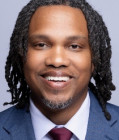
So for this month's episode, I spoke to Professor Justin Ballenger. He's an educator turned academic who's helping students and teachers harness the power of AI to improve learning. He's a professor of STEM education at Morehouse College, the co-principal investigator for the National Science Foundation Funded Institute for African American Mentoring and Computing Sciences, and he serves as the research lead for the National Data Science Alliance.
Here's our conversation.
Lizzy: Hey, Professor Ballenger. Thanks so much for coming on No Jargon.
Justin Ballenger: Good morning, Lizzy. Thank you so much for having me.
Lizzy: You started your career as a middle school science teacher. Can you talk a little bit about the path from being a classroom teacher for that age group to now what you're doing as a scientist and researcher?
Justin Ballenger: Certainly, it's been, quite an amazing journey and I started out in undergrad as a biology major, considering pre-med. And then I got into the natural sciences and became a major in wildlife biology and actually spent a year as a wildlife biologist before going into the classroom.
I had a gap after a project I was working on, ended up taking on a long-term substitute position as a biology teacher in a high school and just fell in love with the profession, being able to connect with students and see learning come alive for them. And so, after that, I went back to school to obtain a master's in math and science education. Taught middle school for about 10 years, between middle school and high school. And just had some really amazing experiences working in, different environments, from rural school settings, I also worked in the juvenile justice system and in urban schools here in the metro Atlanta area.
Just having the opportunity to see some of the differences in access to technology, to how learning was set up for students in different environments, has really inspired the work that I'm engaged in currently at Morehouse. During my time in secondary education, in K-12, it was really when the internet was being integrated into classrooms and where technology was happening and there were many of the same narratives happening.
And so there were teachers that were really upset at the fact that students could go onto Google and look up a math problem or look up a concept in science, and they thought it was going to ruin education. And now you fast forward, you know, almost 20 years later. And, we know that it didn't do that, that there were some things that had advanced, but other areas where, we still have a lot of work to do. And I think we're at a similar moment with generative AI. And one of the things that's interesting about generative AI is that the rate of adoption is much faster than what we saw with the internet in terms of what we're seeing in schools and in industry. And so, it's really important that we get this right, particularly for our school, our students that are in underserved schools, so that we're able to make sure that we support them to be viable members of the future workforce.
Lizzy: That's an interesting point because as someone who also had lived through that internet transition and was in school, you know, learning to go to a library to find citations, and then being assigned for the first time that some of my citations had to be online citations and balking at that, which is hilarious to me now. I really was like, oh, it's so easy to go to the library, and they're asking me to go onto the internet and find information, like ridiculous. And now I think that's such a historical perspective that my children would not be able to parse.
But you pointed out an interesting difference, which is the speed. I'm interested in maybe a little bit more detail about that. How else is the technological shift we're currently experiencing different or the same from those previous ones that you just described?
Justin Ballenger: For instance, with the internet, the infrastructure didn't exist for everyone to have it. I graduated high school in 2000 and so I remember that the internet was available in the library and a few classrooms inside of the school. So like the technology classroom and a few science classrooms that were internet enabled.
And if you were at home, then you had dial-up internet. If you were looking for a paper, then you maybe found it and then you went and did something else for a few minutes until it downloaded, then you were able to read it. And so like now internet is ubiquitous in most places. I think one of the other things that happened is the generative AI revolution because we've been using AI for a very long time. What we're talking about now is generative AI, where this is enabling people to actually become creators and work in partnership with these forms of artificial intelligence.
And so it hit at a really interesting time. So, you know, near the end of the pandemic when people were still at home, working from home, was when OpenAI really released their large language models that we know now is, you know, ChatGPT and that are integrated in Copilot. And, you know, Google has their similar Gemini and, I think, you know, Anthropic with their Quad AI are some of the more popular, large language models that are being used now. But because I think people were in that space during the pandemic, there were a large number of people who adopted it to enhance workflows and even people who helped with tutoring and other things like that.
And, again, with the availability of the internet, I just think, the generative AI revolution has happened very, very quickly. So we've seen this uptake happen more rapidly than with most technologies. And again, it created some connections for people who are more everyday consumers, where you don't have to be an expert in coding or understand working with their students at home or computer technology in-depth, to be able to use them.
And so the human interface for using the technology is also, I think, another factor in supporting this mass-scale adoption that we see happening so rapidly.
Lizzy: Yeah, there's a pretty low barrier to using it. Everyone has the internet in their home and these are just webpage that people can, try out these different forms of technologies, often still for free while they're being worked on. There's not sort of those same physical or technical barriers to usage that there were, previously, but to pause for a minute, just because this is the No Jargon podcast and we have moved into this emergent technological area so quickly that I feel like the public is comfortable with things like the abbreviation AI. We know that that stands for artificial intelligence and that's clearly becoming the way it's referred to, but can you define generative AI for us a bit more before we move forward to talk about your work in education?
So generative AI are gonna. Be, these models and like right now what we're working with are large language models, so this is where you're using text, but, generative AI can, you know, do other things besides work with, text that we're gonna see a lot of this year, being released. it's basically like a large math program that predicts, what users might want to see next or what would be the next logical step.
Justin Ballenger: So like, if we're looking at text that someone is typing in, what a large language model would do is analyze, you know, millions of documents, to be able to predict what the next best word in that document might be. Many people think about it as being human intelligence, but a computer is going to, think a lot differently than we do as humans. So, these are like really complex math problems that are really being solved to predict what the next thing should be in a string of text, or if we're looking at images, predicting what that image should look like based on the descriptions of the text.
Lizzy: The big space we wanna talk about, where they're operating today is, of course, in education. Can you tell me a little bit about how generative AI is currently being used in K through 12 classrooms? Or is it not yet? Is this something that we're thinking of next? what's going on with this particular technology for that age group in our schools?
Justin Ballenger: So I think we're, you know, in a similar place to where we were, as I mentioned earlier, where there's some schools that are adopting it full board, other schools that have banned the use of large language models and see it as cheating. And I think we're in for a huge shift in how these things are being viewed within the next couple of years. I think for one that schools will become more open to the use of large language models and generative AI in the classroom because workforce and industry is adopting it at a very rapid pace, and it's gonna be an expectation for individuals who are entering the future workforce to have these skills. And so, inside of schools right now, in places where it's banned, you're still seeing students that are able to use it. And it's kind of the arms race thing where teachers are trying to find ways to detect it. And, for every detection tool, there's another tool that actually makes whatever outputs come out of the system sound more natural.
So you have, GPT plus one, which changes the language just enough so that it wouldn't be detected by your general detectors for the use of AI. It's making these predictions on what words should come next. And the models are pretty aware of how a model would make that prediction. And so it changes the language just enough so that it doesn't align with what those predictions would be, so it doesn't show up exactly like AI. We're spending a lot of time and resources trying to detect the use of these models. And I don't know what it's really doing for learning.
In other cases, you have schools that have realized that this is happening rapidly. It's not going away. It's gonna be an expectation for the future workforce. And so what these schools are trying to do is to understand how do we integrate generative AI into the classroom in ways that are going to augment learning
We've gone through a lot of cycles and in teacher education particularly where there's this idea that a computer or a robot will replace teachers. And you hear some of that now, but not in the same way that I remember hearing it with some of the technology that came out while I was teaching.
I think more of the language now is around creating partners for teachers in education using generative AI. And so, you know, many of the ways that teachers are using it that have it in their classroom, may be to streamline tasks that are repetitive. So like if we're thinking about generating examples for math problems or a multiple choice quiz, we could generate many different variations and we can actually train the model to be able to grade those examples so that we could decrease the teacher's amount of time in grading.
Other applications could be in building community and managing a classroom. For instance, many teachers will do things like take an interest inventory or have students write about themselves at the beginning of the year or share things about themselves. And the joke when I was teaching was that many of those things went into file 13, which is the trash can, after the first day of school. And teachers really did not use those for anything within instruction because it took time away from what people thought was actual learning. But in this case, we're able to compile all of that information and start thinking about, you know, what are the interests of our students and if we're able to create variations of exams.
And we find out that students are interested in a particular show or certain things that students are not comfortable with, that we're able to analyze the information quickly and find out about it and think about that in terms of how we're engaging with students.
Lizzy: Sounds like a highly targeted, kind of culturally responsive teaching practice. Examples that, draw from experiences that students have and recognize even down to the level of the way we might name people in a math problem. You know, like a narrative math problem. Jenny has 12 marbles and Juan has seven. You know, that kind of thing. And I've seen that shift, you know, looking from my own life to now the materials that my children bring home. And I think that's a good thing. And then I'm also listening to this and seeing how that can be a good thing.
If you know your class is really into Spider-Man and you know that, previously, it's been difficult to retain that information and create personalized materials that are gonna speak to that interest. And so teachers didn't necessarily have the capacity to do that, and it was sort of left on the table.
And these technologies can be a way to operationalize that and make the same types of learnings. It's not really changing maybe the activities or the skills that are associated with certain developmental stages, but it's making it tailored and more engaged in some ways. And I think that's interesting because I was, you know, as you were talking about the ways students are currently using these technologies and how the race is sorted to figure out how to beat them at their own game and make sure people are still actually writing their essays instead of having a large language model do it for them.
I was thinking, okay, what are the benefits here? You know, and then you named some, and that's really helpful. I think it's important to kind of expand our imagination, but what do you see as the end game maybe of this or not, the actual end game? What do you see as an imagined fully positive end game?
What does a classroom that is using all of these tools in a way that's really helping people look like based on, you know, what you are seeing and discovering.
Justin Ballenger: I think, you know, the transition from thinking about learning in terms of a classroom to a learning environment, is really a big piece of this. We're not confined to the four walls of the classroom and maybe not even thinking about how we educate students in terms of batches of students that come in at great levels and are assessed using these metrics that come from an industrial age. You know, one of the important considerations that, you know, we're really thinking through right now in education and in future workforce development is the fact that we've made almost that full transition from the industrial age to an information age.
And so if you think about industrial age education, for most people who are being educated, the thought was that they'd need to be able to read, do some level of math, and follow directions really, really well. If you're working in a factory, the idea is that if your manager tells you to do something or if there's a process that you're following, that you follow the process, and you really don't deviate in order to produce a consistent product.
As we transition to the information age, we hear so much about innovation of ideas and thought and educating people in that way doesn't really produce innovation. Like what we want people to be able to do now is to ask questions, to think about things differently. What generative AI allows us to do is to actually break out of some of the normative ways of thinking and develop these alternate pathways for maybe assessing a problem or, thinking through a creative process. We're in many ways kind of confined by convenience. So we maybe find a model that works and then we just keep using it because we know it works.
And generative AI allows us to do in many of these cases is to actually explore that model, because we don't have to put time or resources into it in the same way that we would've in the past. We have a way of checking it, using the models to ensure accuracy. And even with the example that we were thinking about earlier, we could take those things even a step further, from just naming something to if I'm teaching a computer science program, I could have generative AI assist the teacher with developing a curriculum around maybe creating modifications on the backend of a game that students are really interested in, that's open source. You know, we may be thinking about Minecraft that we could create a curriculum around that, allows students to actually do something in the real world with what they're learning.
As a science teacher, you know, one of the questions that I get all the time is like where am I gonna use this in the real world? And I think that's one of the things that we will be able to answer in short order, by integrating these things, is to actually take real-world problems, real-world data, and have students engage with it in ways that we haven't been able to in the past.
Lizzy: I still, I have this little bit of trepidation and I have this, I think every time I talk to someone who talks about STEM education, and maybe it's a little bit just the reflexive, you know, part of me, I'm obviously a humanities person, you know, I think we've said that enough times on the show. I worry sometimes that we have ended up with a preference for STEM education and exploring STEM education and making it more equitable, which I always agree with making every part of education more equitable. But then I sometimes it feels a little bit like a big circle when we say, okay, well what is so particularly important about STEM that we need to make sure that we're expanding it and funding it and getting it out to more people. And then the answer is usually, well, it's a workforce issue. These are gonna lead to jobs that pay more and we can't allow those trajectories from STEM educations to the STEM workforce to be reserved for elite people who can, you know, be in those programs, pay for those programs, And then I say, okay, so these are the more well-funded jobs. These are important for the modern workforce. Yes, that should be equitable.
But, but why a little bit, you know, it's like, what is it about this, as opposed to other skills that might be in the humanities sector or the social science sector that I still feel are really part of an integrated and well-functioning society. And it feels a little bit sometimes like, it's like, well, powerful people have decided that this is sort of the direction that we're heading in. So if we try not to, we're gonna be underserving the people who make that choice and don't do that, that worries me a little bit sometimes. Um, as a person who's been, you know, an educator and sees kind of the whole child and also has seen what inequity in schools looks like and how that is a huge problem that we need to address in various ways.
How do you see these, this type of education and better education about these technologies, which clearly is gonna set people up for success. How do you see that integrating into holistic education that includes things that aren't that, and how do we make sure that there's gonna be value in all of the things you know, that we need a well-oiled society to be able to do?
Justin Ballenger: No, I think it's, right on point. I think the idea right now is that we've had this binary thought process in education. Either you're in the humanities or you're in math and science STEM topics. Either you're in vocational education or you're on the liberal arts college track. And I think, in terms of what's happening right now, that many of these systems are breaking down. We understand now that there are vocational skills that are gonna be very important, that there's an issue with these individuals graduating with a degree and they don't have the skillsets to support what they actually need to do on the job.
And there are some things in the arts and humanities, if you look at the development of generative AI and many of these tools, there's been such a focus on the technical aspect, that many companies are actually going back to the arts and hiring philosophy majors, sociologists, political scientists, individuals to understand how large populations work to think about some of the ethical implications, for the use of AI, how AI is interfacing with humans, which is going to be very important in the future.
If you were going to translate that into a technology space, they basically had to work with someone who was a computer programmer or someone who had the technical skillset to integrate that. If you're looking at the topical expert, it's being translated through the lens of the technical expert. And so technical experts have bias that's built into the work that's happening there because, you know, for the most part, if you look at someone who's a computer programmer, they probably haven't had extensive training on philosophy and ethical issues, Some of the work that they do, like if it comes to something like that, they might read a quick article, or, in some of the work that I've done in research, kind of come up with their best guess of what they think that should look like.
And many times that's based on their own personal experience. And what we're seeing happening now is that that interface is becoming much shorter so that an expert could actually engage with the system and translate those ideas more quickly, more, accurately, into the system. And so, I think it becomes more and more important that individuals from the humanities are engaged with the development of generative AI, how it's happening in education, and again, thinking about what the purpose of education is.
So like, we gave the example of students cheating on a research paper. As we start thinking about what skillset we're actually working with, is the development of a paper the outcome that we're really most concerned with, or the ability of an individual to think critically and express their ideas to others, to create some type of meaningful communication or meaningful outcome, depending on what your scenario might be as we think about the integration of these technologies. Instead of stopping at that 0.1 and thinking about how do we get students to stop cheating on the development of an essay, how might we leverage these tools to be able to share ideas more effectively and to engage students in critical thinking processes? I think that these tools can really be leveraged for that, and that it's very important for us to engage with people from all spectrums, all disciplines, as we think about the human, interactions with technology.
Lizzy: And so we know of course, that the way to do that what you've just described, to sort of bring coalitions together to think more holistically about not just the usage of these kinds of technologies. You know, a lot of the general public has seen things like congressional hearings on these technologies and witnessed the disconnect between some of the more tech-minded people who run private corporations or do research into these spaces, and I'm interested in your thoughts then, as someone who's sitting in that vanguard space about policy solutions for adopting these technologies right now. It feels a little, it feels a little wild westy.
And then also, of course, if you're in say a district that's more resourced than another, you might be able to have the money and time to invest in technology infrastructure or new forms of teaching and teacher preparation or just new programming, that might get some of this work done, but it's not gonna be equitable. What kinds of policies do you think we need in place? To make sure that we are getting these technologies both into that kind of holistic space that involves the philosophers and the humanities folks who can help us kind of translate better and think about ethical implications. Are you seeing those policy structures take place, or what would you like to see?
Justin Ballenger: Okay. And to be clear, I am not a policy expert. My thought would be around promising practices in education that might support more equitable learning for students. And, I think those promising practices could support policies that would be useful in education. I think for one, again, if we look at our model for education, and the way that we're assessing learning, that we are not really assessing the skills that students are gonna need to be successful in the 21st century workforce.
That the basic model is that, you know, particularly in under-resourced schools, is that we test students on things that we know that we, they don't know. We tell the school that they don't know them and that you're gonna be punished because they don't. And then we test them again in another few weeks on the same thing that they don't know. And so, what happens is that there is this incentive for teachers to teach to the test and kind of teach to the middle, so that they can move students on the testing metrics, which again, is not enhancing creativity or helping students to be able to think critically, and simply preparing them for a test.
And that is not moving us towards the skill sets that we need for enhancing education. We can see the impacts of this even in higher education. We had so many students who've been accustomed to this model that learn how to play the game really well. So they are really excellent test takers and they understand some of the mores inside of the education system so that they're able to game it and they get as on their assessment.
But if you were to pull them into these real-world challenges, where you have to engage in taking these intellectual risks and failing at something. Students who become accustomed to the system, in many cases, they break down. Because they're not used to failing at something and working through to meet a challenge. Just as a teacher and as a professor, there've been many times where I've had students who've earned an A in a course because they understand the structure of school, but they were not the brightest person in the class. And that you maybe had someone who was really, really bright and because they had several absences and maybe didn't turn in assessments or, you know, their disposition was such they didn't engage in certain things, that their marks were lower. But they had some aptitudes and areas that would be really useful. And I think in the system, the way that it's set up right now, that we've turned off individuals who would have a really high aptitude as scientists as mathematicians, as policy experts, who could understand the material. But because of the way it's presented, they don't engage.
Generative AI in particular gives us opportunities to change that. That just in the forms of assessment that we're able to do or personalizing learning, that we could assess students in different ways, actually get them to master learning and, maybe move away from some of the, uh, standardized testing that we're using right now. So, for instance, most of the schools in the metro Atlanta area where I do my work, they spend close to nine weeks either testing or preparing for a test. And if you think about, you know, nine weeks, they're four quarters in a school here. So that's about a quarter of the time that students are in school, they're either preparing for a benchmark test, taking a benchmark test or they're taking the actual state standardized test or end of course test for their classes. And that's time that they're not really learning. If we were to even think about assessment differently, we might be able to embed assessments along the way, so that students are actually, able to move forward, check for mastery in a different way and not limit students in some of the ways that we are right now. And again, even engage them in some of these real-world processes.
I think another thing that we really, it would really be useful for schools to think about is to engage failure as a learning task. Because we know that we learn more from our failures than our successes. But right now, failure is seen as a really negative thing. It's not seen as a milestone on the road to success. It's seen as the opposite or divergent from success. But, I often talk to my students about failing forward, and that's the model that we see, you know, much of the workforce innovation that we're seeing right now is that we are working on things. They don't pan out exactly the way that we want them to, and then we iterate on them. And students really don't have opportunities to do that right now. And I think that's not just in the, you know, STEM industry areas.
If we think about humanities, the arts, anything like that, you know, you don't get it right on the first try. You iterate on it, you think through it. And, you know, you get a better product as you iterate, and students really don't have those opportunities very often in their K-12 experience.
Lizzy: Yeah. That's really interesting, those two points that you just made because I keep searching for, you know, okay, what is the positive here that I'm not seeing? And, you know, personalized learning has always been sort of agreed upon in the background that, you know, if we could, of course that would be the best way to teach. And so what you're saying about, well, generative AI is one of the things that could make that different and could deal with that scale issue with personalized learning. That's really interesting to me to think about.
Justin Ballenger: Yeah, certainly. And I wanna add one more caveat to it because, I think the technology gets put at the forefront, like it's going to solve the problem. And like we've seen over and over again that it doesn't. I am really hopeful in this instance that, again, it's a partnership with the teacher, because I think we could go down a really slippery slope if we hand assessment over to AI engines that are produced by for-profit corporations that are hoping to produce certain things for certain reasons, and even if it isn't intentional, it may be baked into the model, that these things are prioritized. And so again, we could end up in a similar situation where individuals are deemed as having higher value because the AI assessments are saying that you're able to do certain things.
And so that's why I think it is important that we be intentional about the teacher, and the human in the loop being a guide for how these assessments are being developed and, thinking about places that we do produce value. and I think that has to be outside of, you know, just thinking about in terms of, financial monetary value, that there are values in terms of how we engage with one another as human beings how we treat one another, how we, you know, treat the resources on our planet. If these things get out of balance, it causes issues, you know, across the board. And so, you know, really making sure that we keep the human in the loop and that generative AI is not seen as a panacea for, you know, all encompassing solution for some of these issues that we see in education because I think we will still be dealing with issues, just in a different context, that as we solve one problem, we may see some other things that we need to make sure that we have an eye on.
Lizzy: Yeah. And not, accidentally thinking that AI is neutral as opposed to humans, when really it's like, no, that was kind of a little bit of the mistake I may have been making there.
Justin Ballenger: Yeah. And we really know that it's not. So there've been some research that was recently released that found that some of the AI engines were actually intentionally being deceptive, when asked questions, and those were, checked. They produced answers that were really based off of how the algorithm had been trained and not, and I don't wanna say that they were, you know, deceptive, which precludes intent, but they were not producing answers that were accurate. And they did that consistently. And that was based off of how they were trained
Lizzy: Just like humans.
Justin Ballenger: And that there, you know, there's an interesting thing that's happening right now. We're on the precipice of producing artificial general intelligence, that's probably gonna happen within the next year or two.
And that's where, so like, you know, 20 years ago there was a definition for artificial general intelligence that we've already passed the benchmark for. Artificial intelligence being able to perform a task at the level of the 80 or 90th percentile of most humans.
And we're gonna pass that benchmark this year. The next benchmark is going to be artificial super intelligence, where the artificial intelligence is able to perform these critical tasks at a higher rate than any human could possibly fathom. And that is, you know, really one of the things that we need to be thoughtful about.
There was a interesting piece that was put out by Geoffrey Hinton, who is considered one of the fathers of AI, a developer at Google, who recently quit his job so that he could speak more openly. He posed this as a dilemma that, you know, if you think about the history of living things, there's only one example where a less intelligent thing or organism controls one that's more intelligent and that's parents and an infant child. What he posed was that, you know, as we start thinking about many of the artificial intelligences that are being developed, you know, the difference between them and a human being is like the difference between an adult and a toddler. And, you know, what does that portend for, know, the future of humanity and how we engage with these systems.
And, you know, I think it is very important for us to be thoughtful about that. So that the development and implementation of technology needs to be an ecosystem. It has to be, because if it is driven solely by for-profit companies and individuals who may be well intended, but their goal is to optimize the system so they're not thinking about ethical questions, and integration in society, what it means for people in the same way that some people who may have training in the arts of humanities would, that we are really putting ourselves in a precarious position.
Lizzy: Well, I know a lot of us are feeling that precarity and I really appreciate your insights on this technology and its potential to transform because you know, it's thought-provoking and it's a little bit still anxiety-inducing, but I also feel more at ease knowing that researchers like you and so many others are thinking in that more integrated, holistic way.
And I've seen that kind of grow up alongside the technologies themselves, and that does feel like a good thing, and that does feel like something that we're a bit more prepared. For just having that conversation and knowing that that's the infrastructure that's needed at this time. So that's positive and that's, that's what I wanna take away from this.
I don't know if you have any other final thoughts that you feel like we didn't get in that you'd wanna share with our listeners?
Justin Ballenger: So, I'm really excited about the development of the computer science ecosystem. I'll be collaborating with my good friends and colleagues Dr. Valeisha Ellis at Spelman College, who's a STEM educator. And Dr. Valerie Bennett at Clark Atlanta University, who also serves as a STEM educator there. And again, we'll be working to develop our pre-service teachers and to support professional development for in-service teachers in many different school districts.
We recently received a gift from Google for the Atlanta University Center. And so that is the oldest consortium of historically black colleges and universities in the nation composed of Morehouse College, Clark, Atlanta University, and, Spelman College, along with the Morehouse School of Medicine and, the education programs within the consortium from Clark, Atlanta, Morehouse, and Spelman.
We are working on a CS ecosystem, which is centered on the work that we just talked about. So we're looking at how we can educate more CS educators. And this is across the curriculum. How generative AI can be integrated in the classroom in ways that are gonna be ethical, safe, meaningful, and particularly in classrooms that are under-resourced and with populations that have been historically marginalized.
And so we'll be working with pre-service teachers to integrate this into the curriculum so that they're well versed in the use of generative AI and how to use it, to support equitable teaching practices. And then working with in-service teachers, those who are already in the classroom, to support their classrooms And again, particularly in those schools that are in under-resourced areas, so that they're able to think through ways that they might be able to integrate the tools to support further learning. Because, you know, another thing that I've seen is that even the rollout for generative AI is differing in how it's marketed for different schools.
So like, your more affluent schools are tending to engage with AI as a way to expand exploratory learning. And in our under-resourced schools, we're seeing more as a drill and practice model, which again, is not preparing people for the future. And so like we're really interested in thinking through this, you know, imperative for equity, as we march towards a nation where we're going to be more diverse in the future. And, will we really need everyone to be engaged, fully, to support the future of our society in the future of our nation.
Lizzy: Yeah. Well I'm so glad that you and your colleagues are on it 'cause certainly somebody needs to be. So thank you so much Professor Ballinger for joining us.
Justin Ballenger: Thank you so much, Lizzy.
Lizzy: And thanks for listening. For more on Professor Ballenger's work, check out our show notes at scholars.org/no jargon. No jargon is the podcast of the Scholar Strategy Network, a nationwide organization connecting journalists, policymakers, and civic leaders with America's top researchers to improve policy and strengthen democracy.
The producers of our show are Wendy Chow and Dominik Doemer. Our audio engineer is Peter Linnane. If you liked the show, please subscribe and rate us on Apple Podcasts or wherever you get your shows. You can give us feedback on X, formerly known as Twitter, @NoJargonPodcast or at our email address [email protected].