
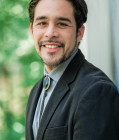
Lisa: Hi, I am Lisa Hernandez.
Avigail: And I am Avigail Oren.
Lisa: And we are your hosts for Scholars Strategy Networks No Jargon. Each episode, we will discuss an American policy problem with one of the nation's top researchers without jargon.
Avigail: Lisa, I'm really interested in the conversation you had in this episode because it's a little bit different than usual. I feel like No Jargon tends to look at policy issues from a pretty wide perspective or lens. So, systemic, maybe national, maybe regional. But the lens in this episode is even smaller than the community. It's really on families and individuals.
Lisa: It's really important to remember all of the amazing research that we share here on this podcast that people come on here very graciously talk about. It's important to remember that behind all of that are real people or individuals and their families. I felt really grateful to be able to speak with our expert today and talk about immigration and deportation topics that are heavy and really important, especially given our very antagonistic national narrative that we are having and all the rhetoric having to do with immigration these days.
So for this episode, I spoke to Dr. William Lopez, a clinical associate professor at the University of Michigan School of Public Health and Faculty Associate in the Department of Latina or Latino Studies. He is also the author of “Separated Family and Community in the Aftermath of an Immigration Raid.” Here's our conversation.
Lisa: Hi Professor Lopez. Thank you for coming on No Jargon.
William: I’m so happy to be here, Lisa.
Lisa: Well, first let's start talking a little bit about your book, “Separated.” You start by telling this story of a man named Santiago, who you were hoping to interview in Mexico. I want you to just tell us a little bit about Santiago's story and how this experience shaped the research you would end up doing.
William: Yeah, that's a great question. I live in Ann Arbor, Michigan, which is in Washtenaw County. At the time I was doing my dissertation, I was also involved in an organization, WICIR, the Washtenaw Interfaith Coalition for Immigrant Rights. We had a pretty big immigration raid in our county. A raid that is the focus of the book. This raid was targeting a single individual who I call Santiago, and there were arrests that took place, through the whole day arresting all of the Latino men that drove out of the place that Santiago was living, and eventually raiding the facility in the apartment, in which Santiago lived, and in which his wife and his sister with their children were also living.
What I wanted to do was be able to understand what the impacts of raids like this are, right? How does this impact the individual who's the target of the raid, as well as the families. Also the community, right? The community in which Santiago and his family lived.
Santiago was detained and was deported, and my plan was to interview Santiago. And the beginning of the book starts with a scene in which I'm envisioning what it would be like to talk to a man whose life had really become the focus of mine at that point, because my work was all about what happened to him. As I tried to arrange this interview, I talked to him, I talked to his family, and they discouraged me from going, saying it wasn't safe right now, and he wasn't ready to talk to me. It wasn't safe right now to go down to the area that he was in, so I had to reframe what I was doing.
What I did instead was just drive over to Dunkin Donuts and pick up some donut holes and drive over to his sister's house, who I call Guadalupe. And Guadalupe and I had these donuts, and chatted with her and her kids who later got to meet my kids.
I learned so much about what deportation was like to everyone outside of the target of the raid. So Guadalupe was impacted, her children were impacted. Santiago's sister and wife, all of these folks felt the repercussions of his deportation in different ways.
Lisa: And how did Guadalupe’s life change on the day of the raid thereafter?
William: When you think about the impacts of a raid, you can think of it in a number of different ways. One is to think, what is it like on the day of the raid and what is it like in the months and the years that follow? You can also think, what is it like in the person's body, right? What is it like? Does it make you sick? Does it change the way you feel and the way you see the world? And I'll talk a little bit about that.
One of the things you see when you're in a facility that is raided, whether this be a home or a work site, are very violent and traumatic enforcement strategies. Raids don't work because agents ask you kindly to leave. They work because of the threat of violence. And it's something I've seen over and over in interviews is that, those who are in the room constantly say, “I was worried I was gonna die.” And what we know from the psychology literature and the research is that thinking that you or someone in the room with you or someone you love is going to die has long lasting psychological repercussions. This is where a diagnosis of PTSD begins. While I, of course, would not diagnose anyone in these facilities with PTSD, as I'm not a psychologist, I can confidently say, as I mentioned, I heard over and over the folks were scared. They, or those in the room with them, were going to be shot.
I'll comment on just one other concrete change. Immigration enforcement deportation often targets men. There's a few reasons for this, not the least of which is that men are more likely to both drive and to be at work, And men are often breadwinners in their families. And the removal of a breadwinner always changes the financial situation of a house, right?
The removal of that financial provider means someone else has to work. Often the mother has to find somewhere else to generate income. It can also mean that teens or young adults will drop out of school to make up for the income of the deported father. In this case, it meant that Guadalupe had to pick up more jobs to make up for the income that she lost when her brother was taken.
Lisa: And Santiago did have a wife and children, so, how did their lives change? Did Santiago's wife have to be finding types of jobs in order to make up for that lost income? Did they also join Santiago in Mexico?
William: Yeah, Santiago's wife and two younger children lived with him. An older son, who was 18 at the time, was also in the facility when it was raided. His 18-year-old son, a young Latino man, was also detained and was deported. And that left just women and children behind in the room, which is often the story of deportation, men being removed and their families being left behind.
When Santiago was removed and his wife Fernanda was left behind, she had to decide what to do without the income. And so Fernanda thought about getting another job, but what she told me is that she was so distraught by the situation, both by the loss of her husband and the actual feeling that she might be shot that she wasn't able to concentrate.
She would tell me she wasn't able to be the mother that she wanted to be, and she was so depressed and so suicidal that she actually took the bus down to Texas and walked across the border to be with her deported husband, and brought her two children with her. Any number of lessons can be taken from this.
One is that she was not deported and her children were not deported. But nonetheless, there were so many other people who were impacted by the targeting of a single individual and the deportation of others, outside of themselves. There were so many people who were influenced by the targeting and removal of this small handful of men, including their wives and including their children.
Lisa: And this was a workplace raid as you mentioned, and the community that was involved. How was the community overall affected by this raid?
William: So it's interesting when you say that this is a workplace raid, but it was also a home raid. So I actually describe it in the book as a home raid. But what this brings into the conversation is that, colloquially or in the community, we often talk about immigration enforcement in ways that make sense to us. Is ICE going into a home or is ICE going into a place where people work or is ICE skating us out in front of schools? ICE doesn't really classify their enforcement patterns in the same way. So this word raid is a word that I and the community in English and Spanish and everywhere else uses, but it's not necessarily the word that ICE uses. This means we often have to work through our language of what we mean when we're talking about different types of enforcement.
In this particular case, the reason I call it a home raid is because Santiago and his family were very much living in what I call their apartment and their apartment was a room on top of his taller, his automobile shop. And both of these facilities were in what was mostly a workshop space, right? So they certainly changed this space to allow them both to work and to live in it. So to your question, what happens to a community, whether it's a home raid or a workplace raid that occurs in that community?
There's a few things that happen that I would suggest. One is that we saw that the arrests that took place after the raid on Santiago or after the raid on his apartment were all of Latino men. And the same situation happened over and over. I was told by Latino men that they looked at me, they saw the color of my skin, and they pulled me out of the car.
So what that means concretely is there were no Latino men driving in that area at that time. We have emergency response systems. These systems may be wary on these particular streets. So folks who are fearful of being racially profiled and deported won't drive. Now this can mean one day with fewer drivers, but often it means days into weeks, perhaps into a little bit longer. It means at a minimum, places like the taller lose their business, their customers, but it also means we lose visits from our family.
We don't go to the grocery store. We stay away from things like the park or even the church. So what you see from the community after an immigration enforcement event like this, is that one's freedom to move about their own neighborhood changes. You see locked doors and you see drawn blinds, the interest of self, of protecting oneself.
Lisa: I appreciate you bringing into perspective the emotional, as well as financial toll, that this can take on a community. I wanna put this in a present context and talk a little bit about the current administration. We're thinking about these mass deportations that were promised by President Trump. You are working on new research and have a forthcoming book that speaks to the effects of these efforts. You also point out that educators are some of the first to feel this impact. So I wanna talk a little bit about how schools and teachers are affected when students and their family members are being deported?
William: This is one that's really been weighing on my heart for some time. My forthcoming book looks at the six large scale work site raids that happened in the summer of 2018 during Trump's first administration. And just to remind folks, these large scale work site raids were anywhere from 30 to a few hundred folks were detained. It hadn't happened since about 2008, following the rate of a factory in Postville, Iowa. And in that particular rate, 298 workers were detained, a significant portion of the town. The raid was seen as such a humanitarian disaster by both sides of the political aisle. President Bush refused to conduct any more raids. So that was the last raid that he conducted. Similarly, Obama did not conduct worksite raids. We saw them return again in force under President Trump.
Briefly, I'll suggest that the reason for this is because President Bush and President Obama, even though admittedly high numbers of deportations occurred under each, both worked toward immigration reform that required some kind of relationship between Democrats and Republicans. When there was an enforcement strategy that resulted in this kind of humanitarian disaster, it would anger people on either side of the aisle, on either the political left or the political right.
President Trump, on the other hand, saw the impact of these work site raids and all of the fallout and all of the repercussions. And he, not wanting to work toward bipartisan immigration reform, saw them as a tool to tell a very powerful story. And that is America. It’s under the control of immigration and customs enforcement. Workers should work as they're allowed to work, and we will remove them when we deem fit in a highly militaristic, efficient manner.
Looking at the impacts of these work site raids throughout the rural U.S., one of the things that we see is its educators who will always feel the impacts of these raids. First, or at least early on, and I'll give you a few examples.
There was a raid in Bean Station, Tennessee, and we talked to a number of educators in a town nearby. Those educators on the day of the raid started hearing about the raid from supervisors in the district, And so these educators have to decide what to tell the children in front of us who are dropped off by a parent may not be there to pick them up?
How do we explain this to our children who are students? And so they're debating amongst each other. What do we tell them? Do we tell them anything? And you have to remember that immigration status isn't something we keep on some ledger about our students. So teachers have to guess who they tell and when they tell 'em, and even if they tell them. And so in this particular case, the teachers gathered together, they thought through a strategy with the primary goal of making sure that no student got on a school bus to be dropped off in a house with no parents in it. Or that they waited in car lines to be the last one at that line because their parents weren't gonna be there to pick 'em up. So these teachers had to think about what they were gonna do. They had to make sure their students got home safely. And then after all of that, when they decided they wanted to, it was time for their students to come back to school. They had to put in an inordinate amount of effort to convince families that school was safe again.
And what we see in the immediate aftermath of these work site raids is just so many absent Latino students. Teachers would go into their classrooms and they just wouldn't have Latino students in them. We saw this in Tennessee. We saw this after the raids in Mississippi. It's fairly well documented in the media and it's fairly well documented in the academic literature now. Just by definition, we think of worksite raids happening between the hours of eight and five. With very few exceptions. We know where children are going to be during that time. They're going to be at school every time a massive amount of parents are taken. It's going to fall to teachers to figure out what to do with their children.
Lisa: I am from Florida, and so I wanna bring up something that happened recently, which is that an 11-year-old student, Jocelyn Romo from Gainesville, Florida, who ended up committing suicide due to being bullied for her parents' immigration status in school. If we're talking about the impacts that these mass deportations are having, it seems like it goes way beyond the actual day of a parent's deportation. Like the effects that children in school are facing, it seems like it's more widespread than we're immediately aware of when we think of the situation.
William: I'm glad you brought that story up, Lisa, as the father of a 12-year-old, it's simply heartbreaking to think about what the family is going through and what that child must have been going through in the moments that led up to that decision. What we, many of us, especially in immigrant communities, have always known, and what others are starting to learn is that the day of the deportation, while it certainly matters, immigration status shapes the other 364 days of that year, and it's not only the threat of deportation. So there's certainly the weight of living under the shadow of the possibility of your removal or the removal of someone that you love. But it's also what others believe they're allowed to say to you because of your immigration status and how others believe they're allowed to treat you.
And often those cues are taken from folks in power and going back all the way to the original, to Trump's first administration. You know, he said that…Immigrants are not bringing their best from Mexico. They're bringing the rapists, right? And it's only gotten worse since then. And when we see this kind of vocal disparaging of immigrant communities, the public just follows suit or allows themselves to follow suit all the way down to bullying other children about their parents' immigration status, And keep in mind, we don't know if those parents were deported or not. That's not even the issue on the table. The issue on the table is that the child was bullied because of her parents' immigration status. And that kind of treatment is only allowed when those we elect. Perhaps who we put in leadership positions gives the example that it is okay to express our xenophobia and racism in that particular way.
Lisa: Absolutely. I think it's important to remember that rhetoric can have a huge impact on people and people's behaviors and the way we communicate with one another. We've been talking a lot about different communities and one of the places where people seek a lot of community and comfort, are.
Faith communities; so churches, religious organizations, etc. I'm reminded that people in these times tend to show up for one another or maybe not. And, I wanna talk with you a little bit about these faith communities and how, or if they are responding to immigration enforcement and what kind of challenges the communities are facing in light of this issue.
William: Churches of various faiths often have long traditions of supporting immigrant communities and supporting refugees. In some of the work that we did following the worksite raids, families were scared to go back to their homes. The thing about work site raids and immigration raids, is that generally ICE does not tell anybody when they're going to happen.
The raids that happened in Mississippi in 2019, ICE did not even tell the White House. And when Trump was approached about this, he said, well, we can't tell anybody because then nobody will be at the worksite. So all of the fallout that extends from this, such as teachers having to care for their students is simply the cost of the collateral.
It's the cost of the deterrent to use Trump's word. But part of what would happen when folks were scared to go back to their homes is that they would go into churches. And we saw this in Texas. We saw this in Ohio. We saw this throughout the rural US and there were a few reasons for that.
One is that churches have traditionally been outside of the reach of ICE. With that distinction of sensitive locations, something we can come back to in a second because that's changed. But when families would huddle in these churches, they also served at these as this place that was a landmark for the rest of the community. Even for those who may not have ever met each other. Immigrants before they knew where the church was and they didn't know if they could do anything, but they knew they could bring food and they knew they could bring cash, donations or money. Or they knew they could volunteer a little bit of their time.
So slowly families would go into the church to be safe, to be protected from ICE. And other community members would go to the church to be able to support them as well. Now, sometimes they were members of this church and this came from their faith tradition. But because the churches also serve as these landmarks in rural communities, they're somewhere where everybody knows about and knows how to get to others.
Now, part of what's tricky is that churches are often funded by or supported by the donations of their congregation. Churches, when they housed undocumented folks or rather housed the families of undocumented folks, it was often seen as an inherently political gesture, and sometimes congregants would get angry about that.
So what we see is that sometimes these churches are places in which immigrant communities and immigrants themselves feel safe. But sometimes when it's a heavily white or Republican district that is anti-immigrant, these churches weren't able to welcome the immigrant communities into their doors.
Lisa: We're also talking about this during this new administration, which has lifted a ban on ICE entering sensitive areas. So churches and schools seem to be fair game for children to be taken away from these schools due to their immigration status or potentially like people being detained and taken from church.
So what does that mean for these institutions? Not only do they have to worry about the congregants that are a part of the church, but also, the actual act of having an Immigration raid happen inside of their halls.
William: So I'll start with a little bit of detail about that change to sensitive location distinction. And so churches and schools among other locations, including courtrooms, were described as sensitive locations on which ICE would not enforce immigration law. During the first Trump administration, you saw the change to the distinction of sensitive location for courtrooms, and now we see rolling back of all of those sensitive locations. What this means is that ICE can enforce immigration law on these properties; on the church property, on the school property. But it doesn't mean that we lose all of our constitutional rights and these constitutional rights exist whether we're citizens or not, for everyone in the U.S. These are their constitutional rights, and that includes the right to different rules in public and private spaces.
So the private space. On the church property, the private space on the school property is still outside of the reach of ICE enforcement unless they have a warrant from a judge. So this means a lot of things. One is that it means knowing your rights as someone who is a teacher, or perhaps a physician, or a nurse, or a clinician, perhaps a priest. Knowing what your rights are on your own property is now very important. You need to know where your private locations are.
And you need to know at least, the words of you cannot come in. Please show me your warrant. So this becomes really important, but what does it mean, right? And I think what the Trump administration's intention was, is just to imply that nowhere is safe,that nowhere is safe from the reach of immigration enforcement.
We see this as the number of daily deportations go down and we see the administration get frustrated by this. And there was this language of we're going to start by arresting. Quote unquote criminals, right? And we could spend lots of time unpacking why this, this phrase and this use of, of criminality and criminals is problematic.
But for the moment, what I will say is, if you support mass deportation, you have to admit, and you have to be able to accept that there will not be folks with criminal records to deport very soon. And that we will be deporting seven year olds who have never been to Mexico, who have never been to Central America from their churches.
And this is a point where I think the public is going to break. The public may believe they support mass deportation, but there are so many points of inflection where the public will have to reflect—how bad are we going to allow this to get? And are we going to allow ourselves to be involved? Are we going to allow my cousin who's an airplane pilot, or my friend who's a bus driver to transport people to the border, or my friend or my cousin who's in the military?
Are we gonna allow them to go into homes in their own communities to arrest people? The public has not had to come to terms with what it means to support mass deportation yet.
Lisa: And obviously, not all of the public has had to come to think about how this affects them directly. But there are ways that communities right now are organizing and supporting those who are impacted by these mass deportations. So do you have anything to share as far as like what are the effective ways that communities are actually getting together and supporting those who are at risk of deportation or who are facing deportation right now?
William: Sure. So one of the most inspiring organizing efforts we saw is in some of our visits to Ohio. So in 2018, there were two pretty big worksite raids, one in Sandusky and one in Salem. Many families will find a sanctuary in a church and will feel safe in a church, but eventually many of these families go back to their homes.
Children will integrate back into schools, and the person who's detained may be released from detention, and now has to await their court date. Part of awaiting your court date is you now have to get, for example, fingerprinted. you have to go check in with ICE. You have to go, pay a bond, or any number of other things.
So the government is often asking folks with no driver's license to go all over the rural US, sometimes hours away. This becomes obviously an impossibility, or at least the challenge because you simply can't drive without subjecting yourself to some level of risk. So part of the response was for advocates to create these webs of available drivers to just simply be able to drive community members who are undocumented, who need to check in with ICE to their destination. In the case of Ohio, we actually saw many folks who are retired and had lots of free time to do so. But in Washtenaw County, we even have a system where you can call in and work through how you can find a driver to get you to your court case, right? So this is really important because it's creative and it's aware of what resources exist and what resources are needed. Often in immigrant communities, those who need to go to meet the most requirements legally are often those who don't have driver's licenses. And citizens often have the privilege of being able to drive. So making that connection has been an advocacy response. I also think we've seen simply a huge uptick in Know Your Rights training.
Ten years ago that phrase “know your rights” was fairly rare. And now I'm hearing it all the time from friends, from colleagues, from folks who have never worked with immigrant communities. And it's great, right? It's important for all of us to know what our rights are, what private and public space is, and where ICE can go.
So the more Know Your Rights training we can have, the better. We see Tom Homan, who is now working in the Trump administration to direct some of the immigration enforcement actions, saying he is frustrated because arrests continue to be foiled by all these immigrants knowing what their rights are. And this is exactly what we want. And I'll remind folks that this language that the administration is using about resisting the law is not accurate. Reminding an organization, a law enforcement organization about your constitutional rights is not illegal.
That's simply your constitutional rights. So educating folks and understanding what your rights are is critical in moments like this.
Lisa: Absolutely. And you know, we've talked about these solutions on a community level, and of course, as part of the No Jargon podcast, we like to also focus on the policy side and think about the policymakers who maybe are in states that are more favorable towards taking action today. What changes do you think would make the biggest difference in reducing harm to immigrant families and communities?
William: There's a few that I can think of. One is certainly whenever possible to make driver's licenses more accessible to everyone who drives. And I wanna keep in mind this is not just an immigration issue. People driving without licenses are dangerous for everyone on the road. People driving without licenses generally means they don't have insurance.
Allowing folks to have a license because they are driving makes driving safer for everyone. So in states that do not offer driver's licenses to any number of folks, that's one of the places to start. There's also other policies and other changes that can be made, depending on where you're working, depending on what institution you work for. In hospitals and clinics, for example, one thing I often see, and this kind of goes back to the driver's license question, is administrators will ask, can I see your driver's license to check you in?
Often they only mean, can I see your photo ID or can I see some form of ID? And that little change in language can be really important in creating a safe environment for folks who don't have access to driver's licenses. For folks who are undocumented. It's always a very accessible change that folks who want to be supportive can make in their offices. One of the issues we'll have to deal with probably in the summer as I imagined, will return to work site raids in the summer, is how to support the educators who have to deal with all of the student absences that follow in the days after these worksite raids.
These raids are heartbreaking. Many interviewees compared them to natural disasters. And being in the Midwest where we are, we heard lots of talk about tornadoes or floods, for example. And one of the differences an interviewee suggested to us is if a tornado wipes out a third of the town, everybody cares. The mayor cares. The governor cares. But when an immigration raid wipes out a third of the town. There's not a political response, right? And, and how can they be? 'cause it's coming from politicians in the government themselves. But local politicians and organizations will have to think through how we can provide some type of response, in the aftermath of what communities very much describe as disasters.
Going back to educators, how do we support our educators and how do we get kids back in school? One of the things to think about is, school is where lots of students get their meals. In the aftermath of the raid in Bean Station in Tennessee as well as in Texas, teachers visited the houses of the students who didn't return to school and brought them food. So all of those educators took their own time to make lunch and deliver those lunches to those students. We will have to figure out how to keep students fed. How do we welcome that back into school?
And frankly in the years that come, how do we deal with the achievement gaps between Latino and white students that show up when students don't attend the school or when students are constantly moving districts?
Lisa: Well, thank you for bringing up those possible solutions with so much care and also for being here with us and sharing Santiago's story, sharing Guadalupe stories and so many other people's stories today. Really appreciate you sharing your expertise with us as well. So thank you so much Professor Lopez, and thanks for coming on No Jargon.
William: My pleasure, Lisa. Thanks for having me.
Lisa: Thanks for listening.
For more on Professor Lopez work, check out our show notes at scholars.org/no jargon. No Jargon is the podcast of the Scholar Strategy Network, a nationwide organization that connects journalists, policy makers, and civic leaders with America's top researchers to improve policy in democracy.
The producers of our show are Wendy Chow and Dominik Doemer. Our audio engineer is Peter Linnane. If you like this show, please subscribe and rate us on Apple Podcast or wherever you get your shows. You can give us feedback on X, formerly known as Twitter, @NoJargonPodcast, or at our email address, [email protected].