
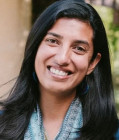
Lisa: Hi, I’m Lisa Hernandez
Avigail: And I'm Avigail Oren.
Lisa: And we are your host for Scholar Strategy Network’s No Jargon. Every other week, we will discuss an American policy problem with one of the nation's top researchers—without jargon.
Avigail: Lisa, Social Security is actually something that I think about a lot. I'm in my late thirties and starting to reckon with my retirement planning. My husband and I are constantly talking about whether Social Security will even exist or if retirement will even be the same concept in 20 to 30 years when we're looking to retire. And so I'm so curious about your conversation that you had this week.
Lisa: I mean, oy, my retirement plan is to cross my fingers and just maybe, I don't know, hope for demise before I have a chance to face the consequences of my inactions. But it was a really insightful conversation that I had and definitely got me to start thinking about that. I feel like it's something that a lot of people my age—I just turned 30, yeah, hold your applause—are just now starting to realize we can't avoid thinking about it, and it just becomes increasingly more important to learn about it.
Avigail: Yeah, I mean we are paying into Social Security. While I think it is wonderful that people are currently receiving payouts from it, I think it's an open question of whether we can count on this government-insured retirement plan. And at the same time, we're seeing the market's kind of tank and wondering if our 403b’s will even suffice.
So, your idea to like take up more and more extreme sports as you age looks appealing, right? Might as well just shuffle off this mortal coil before it becomes an issue. I don't know. Hopefully, this interview will leave us both feeling slightly more, if not optimistic, educated on what decisions we should make with our bodies and our wallets in the coming years.
Lisa: Absolutely. So let's get educated because for this episode I spoke to Gopi Shah Goda, the Director of the Retirement Security Project, the Alice M. Rivlin Chair in Economic Policy, and Senior Fellow in Economics Studies at the Brookings Institution. She is also a research associate at the National Bureau of Economic Research and a fellow of the Society of Actuaries.
Here's our conversation.
Hi, Dr. Goda. Thank you for coming on No Jargon.
Gopi: Happy to be here, Lisa. Thanks for having me.
Lisa: Absolutely. So I definitely want to talk about the Trump administration taking sort of a sledgehammer to a lot of federal agencies and one agency that has already seen some major reductions in Social Security Administration. We want to dig into all of that. And I mainly want to know if you can tell us about the Social Security Administration. How many Americans does it reach? Why is this such an important federal program?
Gopi: I am happy to talk about that with you. So Social Security is a hugely important program to many Americans. In fact, it serves over 73 million beneficiaries, it receives 7 million new claims for retirement survivor and Medicare benefits every year, and almost 2 million claims for disability benefits each year. This is just for 2024 and it's just operating at a scale that requires a lot of efficient processes and knowledgeable staff, and delivers really important benefits to a lot of people.
Lisa: And who are the beneficiaries usually?
Gopi: One of the biggest parts of Social security is its retirement program, which provides retirees with a monthly benefit that they claim, after they've worked, and contributed into the program. But it also provides important benefits to survivors and both spouses and children as well as disability benefits to beneficiaries who may have been working before but can no longer do so, because of a disability. So Social Security provides a really valuable source of income in retirement that actually has a lot of risk protection built into it. For instance, they pay benefits until death. Which means that you're sort of at least partially insured against the risk of outliving your assets because you will continue to receive Social Security as long as you live.
It also provides these benefits in a way that's adjusted for inflation, which is very rare to have an annuitized benefit that also increases with inflation. So it provides some valuable risk protection from that standpoint as well.
Lisa: Well definitely seems like it reaches folks that people on both parties are usually very sympathetic towards. So I wanna talk about the changes that have been happening at the Social Security Administration. Could you give us an overview of the changes that are taking place and what is expected?
Gopi: Sure, I'm happy to do that. This is actually an actively changing area at the moment, and so we're just all trying to keep up with what's happening. Just to give you a bit of context, overall the program spends about. 0.5% of total costs on administering the benefits. So this includes all of the staff that are employed by the agency, all of the systems that are used, even all of the field offices that are operating across the country that allow people to claim benefits and receive customer service when they have questions. And so that's actually a really small share of overall spending on the program. Most of the spending on the program is going directly to beneficiaries.
Overall, the Social Security Administration in the most recent fiscal year employed about 57,000 employees. This has actually already been declining over the past 15 years or so. It was at a peak of about 67,000 employees in 2010. As I mentioned before, this includes both employees based in their Baltimore, Maryland headquarters, but also those working in 1,231 field offices located all over the country.
There have been reports recently that Social Security aims to reduce the size of its workforce to about 50,000. And might be, although it's not entirely clear, closing or relocating dozens of field offices. There's been a recent change kind of in a few different directions about other changes at the agency.
So for example, recently it was announced that certain beneficiaries would no longer be able to apply for benefits through the phone. Applying through the phone is one way that people claim benefits, but they're also able to claim benefits directly at a field office by visiting a field office that's close to them. They can also file a claim online for benefits and even a small share of people still actually claim benefits by mail. So just reducing one of those modalities through which people can claim benefits means that they'd have to choose one of the other ways to claim benefits. And there was some concern that by removing the phone option that beneficiaries who may have to travel far to field offices, it may take them over a month to get an appointment, to visit those field offices, or they might have to apply online, which many people do, but those who don't, may face some challenges in applying for benefits online.
So there were some concerns about how this would actually impact beneficiaries. And just yesterday, just last night actually, they announced that they would be not making those changes and they would keep open the option to claim benefits by phone. This was reported in the media. But hasn't been confirmed by the agency. So it's a rapidly changing environment.
Lisa: Absolutely. And for any listeners, some context here, we are having this conversation on Thursday, April 10th, and it's important to note the date here because as you mentioned, there are changes happening like every single hour it feels like, especially very rapid changes within, how the administration is handling Social Security.
And I want to talk a little bit more, see if you can delve a little bit deeper of what do cuts in Social Security staff lead to?
Gopi: Yeah, so one, I think one place where we have some evidence on what happens when we cut staff, and specifically when field offices close, is in the case of the disability insurance program. So it's worth noting that of the 0.5% of total costs that go into administration for the program, that amount is disproportionately for the disability insurance program.
As you can imagine, that program does require more intensive work to administer because it's not just about providing benefits that have been earned. There's also a disability determination process that is quite involved. So we have some research by two researchers that was published a few years ago who investigated the implications of the closure of several field offices over a 15 year period.
And these field offices closed because of cuts in appropriations over that time period, and what they found is that the field office closures reduced applications specifically for disability benefits by about 10% among those in the surrounding areas. And it actually reduced the share of recipients of those benefits by even more, by about 16%.
And if you've put those two facts together, it suggests that those who were discouraged from applying were also more likely to have been approved by the program than the average applicant. And, so, those closure in field offices, it's not just making it harder for people to apply who maybe wouldn't have gotten benefits anyway. It's actually directly impacting beneficiaries who likely would've been eligible, but were somehow not able to apply because the field office closed.
Lisa: Right. So it seems like people who are impacted the most then lack the access that they would need, from Social Security. So, I wanna see if you can tell us a little bit about the folks or any stories that have come out of those people that have been impacted by a lack of resources due to not being able to access Social Security.
Gopi: So the government accountability office reviewed some data on applicants who filed an appeal for benefits in a report that they released a few years ago. I think one thing to note is that even just waiting for benefits, so even if you apply for benefits and you wait until the agency determines whether you're eligible or not, a lot can happen over that period of time because it ends up being, could be a couple years that you're waiting.
And, what they found is that, a non-trivial share of those beneficiaries about over a percent actually died while waiting for a final decision and another 1.3% filed for bankruptcy while waiting for the final decision on their benefits. So even those people who did overcome the barriers to apply during the time that they were waiting for benefits, they do face substantial costs or may not get those benefits at all if they die during that period. This is a very sick group of potential beneficiaries.
Lisa: Right. And as you mentioned earlier, you know, it's a lot of aging and also disabled Americans that are usually beneficiaries from Social Security. So, what do the changes mean for people who are maybe nearing retirement? How can people make retirement decisions among all of this uncertainty around Social Security?
Gopi: I think that the staffing issues that are currently being discussed or implemented, could make it more difficult to access the benefits that people are eligible for. I don't think that people should necessarily rush to claim benefits in this moment where there's a potential for some panic about whether those benefits will still be there.
In general, it makes sense to make decisions about when to claim retirement benefits based on other factors. And for a lot of people it makes sense to actually wait, because your benefits do grow if you delay the claiming of those benefits. By rushing people to potentially claim earlier than they would have otherwise, I think that could actually negatively impact someone's financial security and retirement over the long term if they feel that they must claim benefits soon or they might go away.
Lisa: We've been talking a lot about these administrative cuts, so I want to know if you have any idea of whether these cuts, mainly suggested by the Department of Government Efficiency, could foreshadow cuts to benefits themselves.
Gopi: So Social Security does face a large financial shortfall, and this has been something that we've known for a long time. The amount of benefits that are scheduled to be paid far exceed the contributions that are expected to be made over the next 75 years. It's been about 40 years since the last major Social Security reform that occurred in 1983.
Right after that reform took place, it became clear that the program still faced a shortfall over that long time horizon, and the experience since then has only made that shortfall larger. Some of the reasons behind the shortfall include changes in the distribution of income and rising income inequality over this period, but also, demographic changes in the population so the fact that people are living longer and also the fact that they're having fewer children, and that means we have less people paying into the program at the same time that more people are arriving at retirement age and claiming benefits. This is also not a partisan issue.
Every year the Social Security trustees report provides the financial status of the program. And it has found, every year, that there has been a shortfall in benefits. And so I do think that the focus right now on administrative costs and staffing is actually distracting us from the bigger question of how to make the program stronger and financially sustainable for the long term.
Lisa: Absolutely. And you know, it seems like there were promises, political promises made during the campaigning of it all, on both parties to protect Social Security. It is something that seems to be really important to all Americans but this new administration, it does seem like Trump and Musk are making these changes because they're claiming that the Social Security Administration is somehow inefficient or that the program itself is full of fraud.
Musk went as far as calling it a Ponzi scheme. So if you could help us clear this up, is fraud something that is prevalent in Social Security programs?
Gopi: So by all accounts, there's very little, extremely little amount of fraud in the program. There are constantly reports and investigations into potential fraud, into Social Security. And every time they come up with a very, very small amount of benefits that might be due to fraudulent behavior by beneficiaries.
The large issue here, the financial issue is really about demographic change, more than anything else. Focusing the conversation on fraud and administrative costs, it really takes us away from that larger issue and makes it harder, I think, to solve if we're not focusing on the right things.
Lisa: Okay, so we've addressed the distraction and I want you to tell us if you have any recommendations on how to strengthen this program.
Gopi: Yeah, so over the last several years, there are a lot of known ways to address the financial shortfall in the program. It’s really just about the math. You either have to reduce benefits or you need to increase taxes in order for the two to balance out. And there are several different provisions that could do either one of these things. You could put them together in different ways. And there are several specific proposals that pick and choose various combinations of these options to put together some kind of sustainable program.
So the framework that I used to think about Social Security goes beyond just thinking about the solvency of the program, but towards a more comprehensive look of who is bearing the costs of potential shortfalls in the future, if demographic and economic factors change again.
So let me explain what I mean by that. Usually, in a retirement program benefits that are prescribed and costs that might be variable. So that would be something like a defined benefit pension program, or you could have a different kind of a pension plan, which is a defined contribution plan. In those plans, the contributions are fixed, but what you get on the other side might vary depending on economic experience. In Social Security, both of those sides are fixed. So there's a degree of rigidity sort of that is inherent in the system, which also creates some uncertainty in what will happen if those two things don't happen to equal out.
Lisa: Right. And you know, I'm thinking about learnings that we can take away from probably other countries that have faced similar issues. When it comes to It seems like the real issue is an aging population and not as many young people paying into the cost of taking care of an aging population.
Are there any models from other countries that we can look to for solutions to help improve our Social Security Administration?
Gopi: A lot of the demographic change that the United States has been experiencing has actually already been happening in a lot of other countries. In fact, our fertility rate is higher than a lot of other OECD countries. Even some of those countries have even better experiences with mortality and longer lifespans than the United States.
And so they've been experiencing some of this demographic change for even longer than the United States. And so they've had to tackle some of these issues before we have, and they've had to make some tough decisions in terms of benefit reductions or cost increases. But there are some places that have also introduced various measures to kind of make those two adjust if needed in the future and those are the kinds of adjustments that I'd like to consider as part of a package of reforms that could make the program more sustainable for the long term.
Lisa: And you know, we've talked about Social Security, but programs like Medicare and Medicaid, do also play critical roles in supporting our aging Americans. So how do cuts or changes to these programs affect the larger issue of retirement security?
Gopi: Yeah, that's a great question because I think all of these go hand in hand. I think a lot about retirement security has to do with the health of the retired population and specifically how people pay for healthcare in retirement. And a lot of that has to do with Medicare and Medicaid. The aging population means that there's more and more beneficiaries in both of these programs
Medicare also faces some financial difficulties in its trust fund and also the other parts of Medicare that don't operate through a trust fund. Medicaid is a program that's also on the radar of policymakers right now. And there are a lot of people who think that there will be substantial cuts to Medicaid benefits in the future that could impact older Americans as well.
Lisa: We've been talking about the distractions. We've been talking about proposed solutions here. And I'm wondering if there are any other aspects of this debate around Social Security that you think the public or even policymakers are overlooking.
Gopi: So one big financial risk that people face in retirement has to do with long-term care costs. And while Medicaid does provide coverage of long-term care services, it only does so after one qualifies through their stringent eligibility criteria. And this means that a lot of people are left with large expenditures for long-term care that they don't have the means to pay for.
It's one big gap in risk protection that older Americans face, and it's one that we haven't really found a good solution for and I think that is an important, important issue to get to the bottom of and figure out what are policy solutions that could address those risks in a way that is also financially sustainable.
Lisa: So as we talk about policies surrounding Social Security, there was in January the Social Security Fairness Act that was signed, and I'm wondering if you have any thoughts on how that has impacted the administrative side and also beneficiaries.
Gopi: Sure. So. Really the only policy action that has happened in Social Security lately since a big set of reforms that occurred in 1983 was this Act, the Social Security Fairness Act, which was signed in January 2025. Instead of actually strengthening the program, this act actually made the financial status of the Social Security program worse rather than better.
It’s a little bit in the weeds to get into exactly what it did, but essentially it increased benefits for about 4% of beneficiaries. And these beneficiaries were typically people who might have worked both inside the Social Security system, in covered employment, but also outside of the Social Security system, say as a public school teacher or a public employee that was not part of the Social Security system.
So the Act actually repealed a change in benefits for this group that resulted in higher benefits for these beneficiaries, by about $200 billion over 10 years. And this is a non-trivial cost that makes it harder, not easier to solve the financial shortfalls that the program faces.
Lisa: Interesting. Well, it seems like, definitely good to think about how possible solutions have these pitfalls as well as we are considering all the policy matters that people have to take in order to address some of the shortcomings of Social Security as it stands now.
Gopi: Yeah, exactly.
Lisa: And thank you for this really insightful conversation. I wanna ask for your advice also as a researcher. A lot of our listeners are also scholars, so I want to see if you have any emerging trends or questions that you think deserve more attention in this debate.
Gopi: Well, I think, the good news is that people are living longer. I think there's a lot of good news in that, and I think that the issues are more about making sure that our economic systems can adapt to those longer lifespans. There’s some evidence that people are getting healthier as well.
It's easy to see the aging of the population as a pure cost, but I think there's some benefits to it as well and we sometimes forget about those. But I think that also means that there's a lot of opportunities in terms of how to address these solutions so that people are both better off and governments aren't sort of stuck paying the bill for these big programs that do provide a lot of valuable resources for this population.
Lisa: Well, thank you for sharing that. Thank you again for all the insight you have provided today, and thank you for just joining us overall, Dr. Goda. It was a lovely conversation.
Gopi: Thanks a lot for having me.
Lisa: And thanks for listening. For more on Dr. Goda’s work, check out our show notes at scholars.org/nojargon.
No Jargon is the podcast of the Scholars Strategy Network, a nationwide organization that connects journalists, policymakers, and civic leaders with America’s top researchers to improve policy and strengthen democracy.
The producers of our show are Wendy Chow and Dominik Doemer. Our audio engineer is Peter Linnane. If you liked the show, please subscribe and rate us on Apple Podcasts or wherever you get your shows. You can give us feedback on X, formerly known as Twitter, @NoJargonPodcast or at our email address [email protected].