
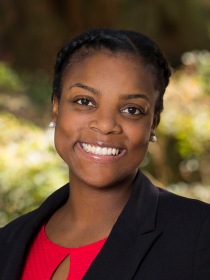
Raquel M. Rall
Connect with Raquel
About Raquel
Rall's research focuses on leadership and governance in higher education. Overarching themes in Rall's writings include decision making, equity, and systemic change. Rall serves as a consultant for the Association of Governing Boards of Universities and Colleges (AGB) and the Racial Equity and Justice Institute (Bridgewater State University). Rall is a research affiliate at the Pullias Center for Higher Education (University of Southern California) and a board member of the Council of African American Parents (CAAP). Rall serves as the Associate Dean for Strategic Initiatives in the UCR School of Education and she is a member of Alpha Kappa Alpha Sorority, Incorporated.
Contributions
University Governing Boards Must Protect the Mission of the Institution
Where are the Boards?
In the News
Publications
Examines how governing boards in higher education can use their decision making to maximize equity in higher education.
Examines how higher education governing boards can move beyond being overwhelmingly white and explores what a more diverse future could look like. Finds that increasing representation—especially of people of color—can reshape decision-making and priorities, but meaningful change requires intentional efforts rather than just small demographic shifts.
Explores how centralized state higher education governing boards influenced public universities’ decisions to hold in-person classes during fall 2020, amid the COVID-19 pandemic.
Looks at how curriculum standards (rules about what students should learn) have developed over time and what shapes them. Finds that these standards are shaped by political, economic, and social forces, and often focus too much on testing instead of meaningful learning.
Explores the experiences of women of color serving on higher education governing boards in California and what their leadership makes possible. Finds that while they bring valuable perspectives and push for more inclusive decision-making, they still face barriers like underrepresentation and bias that limit their full influence.