
5 Experts Available For Timely Analysis on EPA Climate Policy Rollback

On February 12, the Trump administration repealed the EPA's 2009 "endangerment finding," a scientific determination that greenhouse gases endanger human health and welfare, which concluded that the government had a legal basis to regulate emissions under the Clean Air Act. The repeal marks a major shift in federal environmental policy, with wide-ranging implications for climate regulation, public health, and likely legal challenges. For reporters covering the rollback and its impacts, the following environment and law experts are available to comment:
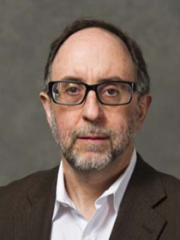
Brugge’s expertise is in occupational and environmental health. His research; writing and teaching have encompassed several topical areas within this field; but he has particular emphasis on traffic/near highway pollution effects on health (especially cardiovascular disease); and housing conditions and asthma in children; asthma in immigrant populations; health effects of secondhand tobacco smoke; and health consequences of uranium mining. He has over 130 scholarly publications; has testified before Congress; and is experienced at communicating with the media.

Camacho has written on endangered species, public lands, land use, housing, infrastructure planning, local government, food safety, public health, and tribal law, policy, and ethics. His institutional design work has also involved investigations into areas such as commodities regulation, banking law, and the U.S. intelligence community. He explores the connections in governance, including the procedural (how to integrate meaningful participation in regulation), the structural (how to better understand and design the allocation of authority between public institutions), and substantive (how the goals and tools of regulation need to be reshaped to better protect dynamic natural systems and manage emerging technologies).

Konisky's research and teaching expertise are in the areas of U.S. environmental and energy policy; with particular emphasis on regulation; federalism and state politics; public opinion. His current projects examine enforcement of federal environmental laws; environmental justice; and public attitudes toward energy and the environment. Konisky formerly worked as a Research Associate at Resources for the Future; and he has consulted for various public and nongovernmental organizations.

Moore is a political and environmental scientist whose research tries to identify and overcome barriers to effective environmental policy implementation; particularly in the developing world. In addition to his academic work; Scott has worked on clean energy cooperation for the U.S. Department of Energy’s China Office; served as a member of a German Foreign Office task force on enhancing green job creation in the states and the European Union; and acted as a non-governmental delegate to several United Nations Climate Conventions.

Zirogiannis is an environmental economist with a focus on energy policy research. His work ranges from applications in the electricity sector (co-pollutant benefits of climate change mitigation policies in power plants), transportation (macroeconomic impacts of the Corporate Average Fuel Economy Standards), and industry (excess emissions of local air pollutants from refineries and chemical plants). He has written op-eds and been interviewed by radio and news outlets about his research on air quality and public health.