
Lizzy: Hi, I'm Lizzy Ghedi-Ehrlich.
Lisa: And I'm Lisa Hernandez.
Lizzy: And we're your host for Scholar Strategy Network's No Jargon. Every other week, we will discuss an American policy problem with one of the nation's top researchers without jargon.
Lisa: And I'm really excited to be joining our banter here this week because it sort of touches on my own identity as a diasporic Caribbean person. So, I'm interested in learning more about I know it’s specifically about Haiti. Definitely can always learn more about folks within the Caribbean.
Lizzy: It's a conversation about Haiti certainly, and Haiti is of course in the news recently. By the time this goes to press and is made public, we don't know that there will have been any changes made to the temporary protected status, which we know the removal of the temporary protected status that covered Haitians had been blocked by the government. We expect more to come, but maybe we'll still be in a holding pattern at this time, which means that it's just kind of everybody's a little bit in limbo. And like you said, if you are part of any diasporic community, not just an Afro-Caribbean one, that feeling of limbo, it feels like part of your identity, for sure.
Lisa: Yeah, absolutely. It seems like there's so many things that go through a back and forth in the last couple of years, and there's another one of those holding patterns that are also dealing with very real people and very real consequences for those who rely on these policy decisions in order to dictate what happens to their lives. I mean, in this case, where they live or don't live.
Lizzy: And I think when we think of things through the lens of psychology or through any kind of mental health treatment or process, we often think about the fallout, like the consequences from a bad thing that happened. And I think sometimes that makes us miss the periods of time that it turns out a lot of us spend time hanging out in, where it's not that a bad thing happened, it's that we're sort of living in this like liminal space where a bad thing might happen and it's a different kind of bad thing, it turns out.
And that's also just a big part of being in the diaspora. That being between am I home or am I away from home? How do I maintain a sense of home if I haven't even ever lived there. What if you were born in the country that you, you know, immigrated to not fully because of your own will, but because you were simply forced to leave for a temporary period of time?
What does it mean when temporary keeps getting renewed? And what does it mean for people who just kind of have to live that way? What does it mean for their mental health, their sense of self? Again, big questions that apply not just to Haitians, or people who love them, but all sorts of folks, which is of course, our audience.
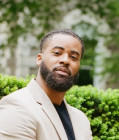
And that's why I'm very glad that we got to speak with Professor Evan Auguste. He is an assistant professor in the Department of Psychology at John J College of Criminal Justice. He's a clinical and forensic psychologist whose work focuses on addressing the mental health consequences of structural racism.
Here's our conversation.
Lizzy: Professor Auguste, welcome to No Jargon.
Evan: I am honored to be here. Thank you very much.
Lizzy: And I'm glad to talk to you because you were someone whose title immediately gave me a little bit of jargon to unpack. I wanna ask you first off, what is forensic psychology?
Evan: That's a beautiful question. So forensic psychology is the intersection and the practice of psychology and law. Anything, any type of work that you do that strikes at that intersection, you're doing the work of forensic psychology. Whether it be immigration, whether it be state hospitals, all these things intersect right at that specialization.
Lizzy: Got it. That makes sense to me and for the context of the conversation that we're looking to have today. Because it's through that lens, the lens of a forensic psychologist, that you specifically look at some of the issues that the Haitian community is dealing with. And we are taping this episode here in the second week of February. Last year, the Trump administration announced that it would be ending the temporary protected status program for several countries, including Afghanistan, Venezuela, and Haiti.
What would've happened last week on February 3rd, just a day before that deadline, a federal judge blocked the order. So that's blocked for now. We expect the administration to appeal that. It means that the temporary protected status is in place, but it's also in question. And you know, that kind of imbalance, that insecurity, that's its own situation that's bound to affect people's psychology, their mental health, their sense of their communities. Tell us why this temporary protected status matters so much for the Haitian community.
Evan: Of course. So, temporary protected status was, I believe, first afforded to Haitian people following the 2010 earthquake. And it's this status that allows for legal migration, for people to move and exist safely outside of their country. While conditions hopefully stabilize.
And so the revocation of TPS is supposed to be dependent on an analysis of the conditions on the ground and whether or not it is safe for people to return. Unfortunately, again, we can talk about the history of not only the United States, but French and other nations meddling in the politics of Haiti.
The conditions in Haiti have, in fact, deteriorated politically. Right now, much of the capital is controlled by what some people call paramilitaries, other people call gangs, the largest of which, which is Viv Ansanm. So the violence where almost a million people have been forcibly displaced, makes it so people cannot currently return and be afforded a safe homecoming.
Lizzy: This is reflected in the findings of the judge who blocked the ending of temporary protected status for Haiti. Specifically, it was this discussion that there needs to be an evaluation of how safe it is in the place where people are from. That has not been performed by the U.S. government in this case, but it's also quite well known to the government and to everyone that the situation is not great. Current conditions do not seem to be back to a safe space.
You put that along a larger kind of spectrum of history. It sounds like Haiti has a history of various kinds of tumults. The earthquake was not the first thing to happen that would have maybe given people a reason to seek safety. And since then, it sounds like there's other things that have happened that have kept a space that is not necessarily safe for folks, but that has led to quite a Haitian community in the U.S. This is one of the places where people have gone to seek refuge.
Tell us a little bit about the American Haitian diaspora community that has resulted from temporary protected status.
Evan: Within the U.S., you've already had many hubs of Haitian culture. Many distinct cities, I think the most popular of which are the Haitian communities in Brooklyn, New York; Boston, Massachusetts; and Miami, Florida. And when you move into these spaces, you see just this vibrant mixture of culture, food, dance, celebration, especially in these cities that have already a lively and integrated Caribbean, Afro-Caribbean community.
And so when you look at the Haitian community in the United States, you have people who are shaping the arts. There are people who are shaping practices of community care. There's a fantastic group, I believe, located in Brooklyn, I wanna say, who is doing fantastic local community education, providing community care. And so for a lot of people who've grown up around the Haitian community, they're intimately aware of how they've kind of transformed, again, not just brought Haitian, but like really shifted and shaped local culture and custom as well.
Lizzy: And you see that not just as someone who's deeply connected to Haitian diasporic life yourself, but as a scholar who's looking through this forensic psychology lens, and looking at what people are experiencing, what needs to be tailored to be specific to a specific community in order for it to work. If we have certain goals like improving health outcomes, what are the kinds of emotional and psychological reactions that you see either through your scholarship or in some of your community-engaged work?
Or what do you expect to see as people are weathering the continued uncertainty? You have that original uncertainty that we've talked about, instability at home. You have the instability that kind of comes naturally with being a diasporic community. Maybe you gotta learn a new language. Maybe you have to have neighbors that you weren't used to before. You have to figure out how you fit in. There's that measure of uncertainty, even though it's not necessarily bad, and now we have this program that was protecting people being in limbo, that's another layer of uncertainty. How is that looking like in the Haitian community as far as you can see?
Evan: Well, I want to anchor it first off in the fact that a lot of people who are in the diaspora love Haiti, right? There's a lot of people who have a deep yearning for their homeland. It's a homeland that people, in terms of their direct lineage, understand themselves to have fought for, to have co-created one of the most brilliant revolutionary projects in human history. And so there's a lot of people who feel deeply and intimately connected to the country.
I also want to anchor how people are experiencing the violence on the island. Before we can understand the depth of pain and the diaspora, we did a qualitative study, I believe in 2023, where we asked focus groups of Haitian people living on the island about their experiences of the displacement of the chronic violence.
And it was a series of conversations about sheer terror and hopelessness. Just deep pain that Haitian people were experiencing. A number of people said for the first time, it was difficult for them to see a way out. A lot of people said they had gotten to a place of beyond suicidal ideation with the idea of taking their own life, but not even having the full motivation to even harm themselves. The people who are completely depleted of a lot of energy.
This is the psychological state of the people who are on the island. And because of this, fleeing for some hope of protection, not just for themselves, but for their family. And so, when we ask people in the diaspora, we do a number of healing circles, which we'll talk about briefly, I'm sure, you see this paradoxical distress. You see people who live in places that they never expected to, right? A lot of these people are used to being by the water, maybe being in the mountains, and now they're dealing with harsh winters. A lot of people miss the fruit that they used to eat right in their backyard. They miss the local customs and being able to engage in them with no distress or no shame. And now they find themselves in a constant state of threatened statelessness, and so it is deep, deep fear.
Deep fear that at times turns inwards. There's some infighting going on in the Haitian community. Some people say the newer Haitian immigrants on TPS are ruining the good reputation that some Haitian people who are here have been able to steward. And all this is right in fighting because of the looming threat of being forced to head to a country, some people haven't been there in years, with no sense of safety.
We had a healing circle that we did, and I also want to say that the healing circles we do, we make sure that all people who attend are comfortable with their story being shared publicly. And the participants there spoke about how one of their good friends had died by suicide shortly before the beginning of the healing circle because she had her services cut off. She had two children, and she reached this place where she could not understand how she was to function as a mother, you know, and fear and shame. She took her own life, and this type of pain, it wasn't shocking to everybody, but it was very, very recognizable for how they were walking through their day-to-day life.
So, I wanna speak to the heaviness, the weight, the despair that people are carrying with them as they have to deal with this yo-yoing of the TPS protections.
Lizzy: And your research often looks at how structural anti-blackness shapes mental health and how structural trauma works in communities like these. Can you unpack those concepts for us a little bit? 'Cause I don't wanna lose sight of that as well. We're talking about a specific community from a specific place, but also these are people who are going to be viewed by a lot of Americans as Black people, and then secondarily, perhaps as Haitian people. And there's some layering going on there with how then the systems of law, of schools, of communities, kind of how those are already structured around them.
Evan: Exactly. So a lot of the times when we look within psychology at the ongoing clinical research on racism, on bigotry, it'll focus on the interpersonal interactions. Understandably, those are very easy to measure and assess. What we examine is how those specific histories -- I briefly referenced Haiti's revolutionary history -- how that shapes institutional responses and logics, understandings of people, which then again, motivate or shape their day-to-day experience.
So, as a very clear example, people will be very familiar with when Donald Trump and JD Vance were running their campaign, how they locked in on the Haitian people in Springfield and said that they were eating cats and dogs. A number of my colleagues, when we were discussing, we noted the distinction in the rhetoric where, when you look at a lot of the xenophobic rhetoric that was occurring, the idea was these people are sending their worst, right?
They're sending, whether it be criminals, they're sending people who may be dealing with some type of psychological distress or injury, right? These people are the worst, right? Conversely, when you examined the rhetoric around Haitian people, it was their essence as Haitian people which made them unfit for American society. It was their culture, it was their very being. So it wasn't this idea that, oh, we're getting the worst of Haitian people. It's like, no, to have a Haitian person in your community means your community will succumb to this type of chaos and savagery. All this is rooted in a lot of history. A bigotry when it comes to the Haitian cultural, religious practice of Voudou, for instance.
And so again, that becomes systemized. The continued specific yo-yoing, as I mentioned before, of these protections for Haitian people in particular.
Lizzy: There's also a real built-in assumption in U.S. immigration policy that people who end up here from other places desperately want to be here. And you've already made some really interesting points about how this is specifically a diasporic community that is often people are very, very tied to their homeland. People want to return to a safe place where they grew up, where they're not, they're not here because this was some sneaky back way to break into the U.S. You know, it was like, no, this is a necessary protective moment that we're supposed to be doing other things in order to have the place where they want to return to be safe for that. And then that's something that people would be interested in.
But meanwhile, while people are here, while people are dealing with this structural trauma, your research has, you know, uncovered some ways, and you've worked not just with researchers like you, but within the community and with some clinical practitioners to develop some tools that are specifically attempting to address what this particular structural trauma means and what it looks like. You've mentioned healing circles. I wanna ask you to describe Lakou Tanama. This is a mental health and community initiative that's rooted in Haitian culture. You are one of the co-founders. Can you tell us how that started and what you've built there?
Evan: Of course. So Lakou Tanama was shaped following the paramilitary takeover of Haiti's major airport in Port-au-Prince. I was, at the time, the chair of the Association of Black Psychologists’ Sawubona Healing Circle program. The Sawubona Healing Circles are an African-centered virtual intervention for racial trauma, for Black people who are experiencing these structural and at times interpersonal harms, and a safe space for people to come and be connected through their own cultural rituals, stories, and what have you.
So we were doing a Sawubona healing circle for Haitian people in particular. And one of the people who attended was a brilliant healer in and of herself, Nadège Bellande Robertson, who'd been doing healing circles and healing work in Haiti for the better part of, I wanna say, 15 or 20 years. When she came there, she said, I've been doing circles, I've been doing meditations, but the pain that I'm seeing has gotten too heavy for the practices that we're engaged in right now. Seeing how you're incorporating our own culture, our own history, I feel like this has the depth necessary to hold the fullness of the despair.
And so Nadège and I came together and we looked at Haitian history. A lot of people don't know that what's called ethnos psychiatry, the idea that psychiatric practice needs to be rooted in people's own cultural paradigm, actually started in Haiti with the work of Dr. Louis Price-Mars following the U.S. occupation. So we rooted our practice within that legacy, our Haitian legacy of healing that honored both these religious, cultural, spiritual practices, as well as the advances in psychological and psychiatric science.
So we threaded those together to shape our own specific version of the healing circle. Lakou is a Haitian word referring to a courtyard. So those initial Haitian people who fought for their own liberation, there's a scholar by the name of Jean Casimir who says they were trying to reproduce their version of an African society, and their version of an African society was demonstrated in the courtyard, in the lakou.
And so we wanted to honor the Haitian co-creation of their own spaces. Tanama is a Taino word. So for people who don't know, one of the first peoples throughout the Caribbean, the Taino and the Arawak, were some of the first people to confront the Spanish colonists. And so we want to honor their wisdom as well. Tanama is butterfly in Taino, so we think about this as a courtyard of butterflies. A backyard of transformation for people to engage in their own collective healing practice.
So within our Lakou Tanama circles, they get to hear this history, but mostly we open up this space for them to talk to and recognize these histories of harm and pain that everyone is experiencing. We've done them all over the island thanks to Nadège and her powerful networks, and now we're doing them virtually for people who are experiencing this continuing violence of the threat status of TPS. These circles were organized by myself through In Cultured Company. In Cultured Company being a Haitian and Dominican collective focused on collective wellness and conflict resolution on the island and in the diaspora.
Lizzy: And how does that setting specifically differ from what we'd consider a traditional mental health setting? Like how, the difference you've described, what those healing circles look like? The origin of the name I thought was so descriptive about what you're trying to create. How does that show up differently than maybe care that someone would seek for, say, a diagnosis of clinical depression or anxiety?
Evan: It's a beautiful question. So with a lot of people, and I think sometimes we lose sight of this, right? Psychological diagnoses and psychiatric diagnoses emerged specifically in response to the despair of a particular population. Our understanding of PTSD emerges following how our soldiers coming back from the Vietnam War are displaying their trauma, right? We anchor our initial conceptions of trauma within their experiences because we had a group of people that we wanted to help heal. There's this universalizing that occurs where in the U.S., much of the West, then takes their psychological science and tries to impose it upon a number of distinct peoples, looking for evidence that what we have is the category of distress, and therefore our paradigms will help.
I wanna note that a lot of people have been successful, right? Healing platforms, healing interventions have had a tremendous amount of success, globally, but sometimes we miss that. All groups of people have that agency, have that cultural power to name what they're specifically looking for in their healing.
And so what we did, both in those focus groups and also within my research lab, is interview Haitian people both in the diaspora and on the island, and asked them to describe their trauma, describe their or their stress, describe how history has hurt them. We did a series of analyses pulling together distinct experts from various fields, many of whom were in psychology as well as psychiatry.
And what emerged was a desire to heal from history, a desire to heal from the spiritual and cultural stigma that they were carrying. A desire to also shape their political future, as well as a place to hold, as you named the deep depression in the trauma that they've been holding individually. And so Lakou Tanama emerged to hit at these multi-level factors that Haitian people were naming that they wanted to heal from.
This was key because I wanna name, when we first started rolling out Lakou Tanama and explaining it to people, a lot of the initial pushback that we received from funders was, we want to stay doing psychology. Psychology means we are specifically doing trauma-based work. We're specifically doing, cognitive behavioral-based work. When we started inviting conversations about religious and cultural stigma, people who were afraid to cope with their practice of Voudou. When we started inviting conversations around politics, there's some people who pushed that aside, like, that's not psychology. We want to do psychology.
But what we were able to do, we've published a lot of this work as well in various academic journals, is demonstrate that no, if we're talking about specifically addressing harm among Haitian people, you cannot separate these pieces. Not only do we have the history through the work of Louis Mars, as I mentioned, we have contemporary evidence, through our psychological science.
And so that's what makes it distinct. We create a specific space where, again, the cultural or political understandings of the people aren't a side road to get to the trauma. They're just as central in helping people heal.
Lizzy: And what do you see as the outcomes when that's done correctly? You've said how this is a space that allows Haitian traditions and collective memory, the trauma that comes from those things to be unearthed and shared. Then it's also those same traditions, that same collective memory, that same history that can be traumatic is also a source of resilience, and it's part of the necessary path that people need in order to improve their mental health outcomes. What does that look like when these services are actually put in action in the way that you've described?
Evan: So what I would love to do is to demonstrate it by sharing one of these stories from the circle.
We did a circle on September 16th for eight people within the Haitian diaspora, and a number of these people were working on the front lines, trying to galvanize resources, galvanize people to somehow intervene in the distress that Haitian people were experiencing.
And here's what that circle said:
“These are difficult times in the industries where we work. We are eager. Eager to feel grounded, eager to move with strength. We search for community because it is essential that our people have space to speak freely and honestly. The space helps us cope with all that is happening.
To discover new ways of being a community is not optional. It is survival at times. I feel like we are an exodus chased by Pharaoh. We feel alone in this work of supporting our people. The last few months have felt like watching our work die. We grieve our previous efforts. The organizations we work with do not always feel like family.
Too often, they see themselves as superior to Black immigrants. Now the message is my people before you, your people. How can we show up when the needs are so urgent, so overwhelming? We must ground ourselves in community care networks that allow us to check in. Practices that sustain us for the long term, not just the short term.
We need this to keep going. We work tirelessly and we show up for each other out of love through yoga, meditation, stretching. We find breath map on some. We are together and we are resistance.”
Lizzy: Thank you for sharing that and thank you for the people who, you know, participated in the kind of programming that allows feelings like that to emerge and have something that can be shared. Which also feels a little bit like the reversal of what you just named, to this feeling that sometimes even communities of support for an immigrant population aren't always fully on the side of that immigrant population, or that we create a situation where we say, you are the victims, you are the oppressed people. What could you possibly have other than looking inward at yourselves, when really here, what you read just now, that quote showing how like, no, there's actually, it's the other way around. Like, yes, these are communities that need support and it needs to be tailored support that understands, you know, the culture that we're addressing.
But that's useful for everyone else, rather than what you described this way, that psychology has often operated where we try to say, all right, this worked for this one group. Now we're just gonna call everybody. That we're gonna say, you have the same problems as a Vietnam veteran, we're gonna call that PTSD, and we're only gonna recognize symptoms that fit, you know, within that box.
It's like, well, no. What if instead we had tailored support for specific communities and could actually learn from them? What are the ways that those communities can be involved in? Pushing outward, making things available to others. Which leads me to kind of our, you know, our wrap-up questions. We often try to take a bit of a step back and say, okay, we've discussed your research, this specific project and some personal stories from there looking at that policy level. For a lawmaker or a government official who might be listening to this podcast, what do you wish they understood about the psychological and emotional ripple effects of doing something like ending TPS or having the ending be having it be in limbo for a group of people, just be insecure legally in that particular way?
Evan: I think about it at multiple levels. At first, I think about the level of ethics, not only historically but currently. Again, these are people who – it shouldn't be confused, right? – love their country. Many people love where they're from, they miss their family. And so people coming here shouldn't be – which I think is framed sometimes – shouldn't be framed as some sort of manipulation of the system in order to get away from a place. Like, no, like there's, there's holidays, there's customs, there's food, there's ways of being, there's nature that people feel intimately in relationship to and yearn for. And so that should shape an understanding of what it then means for people to have fled. I'm gonna pause 'cause I was about to make a joke about Springfield, Ohio, and I do not think that would be helpful.
Lizzy: It's funny. So I live in Springfield, Massachusetts, one of the other Springfield. There's very many of us. So this is in Western Massachusetts, which is another big Afro-Caribbean diaspora space that I think often gets overlooked, you know, 'cause we're not New York and we're not Boston. But that's a big part of the culture here, too. And to hear it, that story of that one Springfield. I think it's also important for us to say, you know, we used that moment of your talking about what that rhetoric coming from our federal government meant, and it's very important to state very clearly that that was wholesale a lie, not based on any actual observation. That was a choice made to just say a dehumanizing thing about an entire group of people. With the implication being, like you said, not even that this was the worst of a particular country that was sent to the U.S. but that this particular country was fully like wholly the worst, that just being Haitian was something that was bad, was un-American.
What does it mean to try to cleave off pieces of people and say, no, that's not us, versus what do we stand to gain when we work against that and have people saying, no, this is us too. I wanna share my culture. I wanna make a space for myself and my people, but I wanna make it. Here, somewhere that my neighbor can also see, and can also participate in. I think that is a message that certainly our federal government is not currently putting out there, and it feels like you have experience and research that says here's what would be a positive impact if instead we looked at this from a different angle.
Evan: Yeah. And I just, so there's one more piece I wanted to add. If we take a historical perspective, we should be very clear on what Haitian people have been capable of. We're talking about one of the most brilliant examples of freedom, right? Exalted by a group of formerly enslaved African people who united to hold the world to their ideals when slavery was abolished in Haiti. They used the country as a place of freedom for people who were formerly enslaved in the world. They took in people who are fleeing genocide or enslavement. They helped liberate the eastern portion of South America. A lot of the way we understand the world, especially this hemisphere, was shaped by Haiti, and that's not just 200 years ago. We're talking about a people who allied across class lines when the U.S. occupied the country at the beginning of the 20th century.
So we have a country that has demonstrated time and time again that when it gets pushed to reveal the morals that serve as the bedrock for the culture, that it is rooted in a radical solidarity, freedom, and a cultural wonder. And so when we give Haitian people the time and space to articulate their political futures, we see that it should be clear that in the last 20, 30, 40, 50, 60, a hundred years, Haitian people have not been afforded the opportunity to do that.
And so whether it be government officials who are maybe growing frustrated with the conditions in Haiti, it should be clear, it wasn't Haitian people that assassinated the president. You know, the Department of Homeland Security and their own reporting is very clear on that. We're living only two decades after a U.S.-backed coup in the country.
So we've had time and time the interference of Haitian people actually being able to construct and build a country that reflects their values. The piece I want to add on this, if we know this has been the case for over a century, the level of patience and grace we have to then afford a people who are ruling with centuries, right, of this type of manipulation, right? It might take more than 2, 3, 4 years for people to build them up.
The only thing I want to add to that is now this is exactly what we're seeing, this threat of removal of TPS, even our Lakou Tanama work, which previously had focused completely on people on the island, how they were experiencing violence, bringing people together from distinct, towns and villages to serve as a site of transformational justice. We've even had to shift our work because we understand the trauma. That being, for a lot of people, being sent back represents when they do not have places to stay. So this threat represents the continued assault on our ability to organize and build as opposed to forcing Haitian people to build something quicker, right?
People are being intentional, people are being creative. People are being, I think, revolutionary in the way they're thinking about building forward the country, and these continued assaults just push us backwards.
Lizzy: I think you kind of answered what I realized was sort of my unvoiced question also, when we were talking about Springfield, Ohio, which was kind of, you know, why Haitians. We talk about these things at a national level and you lose sight of the actual size of some of the populations that have been under attack by various policies. You know? Yes. There's a lot of Haitian people in America, and also this is a very, this is a small country to begin with. Haiti, and this is a, we're talking about a relatively small group of people. Why the focus and yeah, it's easy to forget the for, well, I shouldn't say that. It's easy for many Americans with an American education to either forget or not have fully been educated about how Haiti was a true laboratory of democracy. And it's obvious when you think of that historical significance about why that would be threatening to anyone trying to attempt a more authoritarian type of government. And that feels like a bit of an answer to me about what a particular target is, what that means for our government as opposed to the obvious trauma that it would mean to anyone on the other end of it.
Evan: Exactly. I think you've named it exactly.
Lizzy: I wanna leave you with the last word because you brought me to no, and that was actually you. You really, you brought me to that. That was, that was what came from listening to you as we were talking. And I think, I love when I have an epiphany kind of during a conversation like this, 'cause that really had been a question on my mind. And you, you've helped me see that I think a lot more clearly, but I wanna give you the final word.
I love what we've learned about, you know, everything that you have studied and everything that you have enacted that shows that there is a way forward that shows that yes, when you do it right, you do empower people and you do cut through some of these just incredibly flattening traumas that get leveraged against people. Give me a final word on that, 'cause it sounds like you have seen some things that, as bad as this is in the moment, make you hopeful for people.
Evan: I want to be very precise, and this might not be the note that you're looking to end on, which is again, we see what ICE is doing to various communities around the country. Even as that is going on, that shouldn't be used to skirt around the continued -- again, I'm a forensic psychologist, so I see the continued state violence in various settings, whether it be policing, whether it be psychiatric facilities -- and so we have a lot of state-based violence.
We know that we're living in an administration that is kind of very intentionally constructing a white Christian nationalist project. We have a lot of tech oligarchs who are highly invested in the construction of this project. And so you ask like, okay, what is something that gives you hope? I tell my students, I tell my colleagues that I don't always operate from hope, but I think the least that we can do is organize for our people because we have no other option. I think James Baldwin said he refused to be a pessimist because that means human life is an academic matter. And so he's forced to be an optimist.
And I lean more in that lane, like the least we can do and the most that we can do is continue to organize for our people. And so one thing that I think shapes that, I wanna share another story from the circle. One of them closed with this reflection the people said:
“The circle is where we find what we need. It is a place of weeping and a place of strategy. It is where we imagine shifting our conditions together. We don't want to be resilient. We want to be revolutionary through shifting our mindsets, self-determination, the removal of occupying forces, and remembrance towards that ethic right there.” That keeps me going when it comes to this work.
Lizzy: I think that can be hopeful for people. So I think we'll leave it at that because, not because that's a hopeful note, but because that's the real note, and that's where we deserve to be. So thank you very much for being with us today.
Evan: Definitely. Thank you so much for having me.
Lizzy: Of course, and thank you everyone for listening. For more on Professor Auguste's work, you can check out our show notes at scholars.org/no jargon. No Jargon is the podcast of the Scholar Strategy Network, a nationwide organization connecting journalists, policymakers, and civic leaders with America's top researchers to improve policy and strengthen democracy. The producers of our show are Wendy Chow and Dominik Doemer. Our audio engineer is Peter Linnane. If you liked the show, please subscribe and rate us on Apple Podcasts or wherever you get your shows. You can give us feedback on X, formerly known as Twitter, @NoJargonPodcast or at our email address [email protected].