
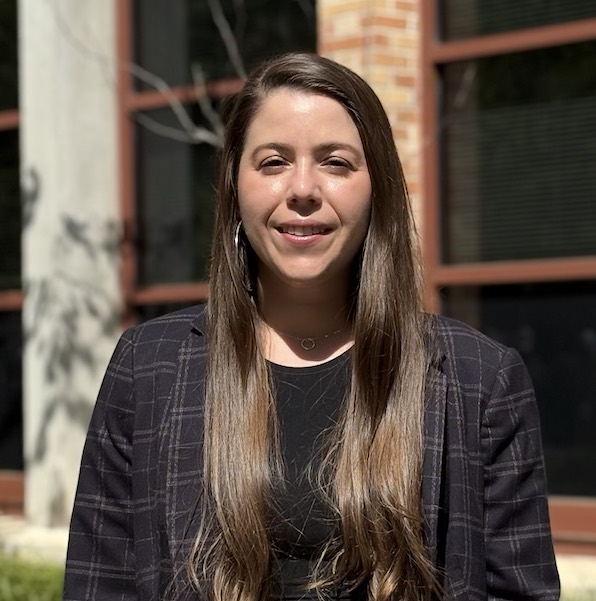
Jackie Pedota
Connect with Jackie
About Jackie
Dr. Pedota's research examines educational access and opportunity within racialized organizations and restrictive political environments, illuminating the mechanisms that reinforce and reproduce inequities for historically marginalized communities in higher education. Pedota currently serves as Co-PI alongside Dr. Liliana Garces (lead PI) and Dr. Eliza Epstein (Co-PI) on a Sloan and Trellis Foundation-funded research project that examines the implementation of the anti-diversity, equity, and inclusion law in Texas and its consequences for racially conscious policy and practice.
Contributions
Publications
Reviews findings from 51 research studies on campus identity centers—like Black or LGBTQ+ centers—and asks what helps them succeed and what holds them back.
Investigates how faculty members from two public universities understand and respond to proposed legislation designed to restrict open inquiry and expression on campuses, which particularly targets race-related scholarship and diversity, equity, and inclusion efforts. Findings reveal that senior leaders’ and academic administrators’ responses can influence faculty members’ understandings and actions, which often leads them to restrict their teaching and scholarship on race unnecessarily.
Examines administrator responses to hate speech and impacts for racial inclusion at a private university unconstrained by First Amendment protections. Findings illustrate that, even in this context, prevailing notions of free expression hinder efforts to foster racial inclusion and compassionate responses to hate speech. Proposes an “inclusive freedom” approach that leverages norms of academic freedom as a path forward for postsecondary institutions to address harm in the aftermath of hate speech.
Examines the racialized administrative burdens faced by Latinx staff and students as a Latinx campus cultural center becomes more integrated into a Predominantly White Institution. Illustrates how Latinx staff navigate organizational policies and procedures while striving to support and retain Latinx students, and encourages leaders to develop student-centered and equity-driven university policies and procedures while addressing additional barriers.
Examines faculty members’ responses to restrictions on open, robust inquiry and expression at a public four-year university within a state that had proposed or enacted legislation targeting curriculum and knowledge production focused on race. Findings illuminate how even the mere threat of possible legislation can curb faculty efforts, leading to potential negative consequences for racial inclusion within higher education and broader society. Proposes various strategies to facilitate understanding of academic freedom, foster support for Faculty of Color, and promote collective action among stakeholders at public postsecondary institutions.
Explores the experiences of Mexican American college students in the Rio Grande Valley during the COVID-19 pandemic. Findings suggest that Mexican American students leveraged their regional cultural assets to navigate health disparities, secure income for themselves and their families, and prioritize familial responsibilities while completing virtual coursework during the COVID-19 pandemic.
Summarizes a study examining how administrators' perceptions of the legal environment shape their actions to undermine racial inclusion at their universities, a dynamic termed "repressive legalism". Proposes potential measures administrators can take to support the physical, emotional, and academic needs of students of color and others who are harmed.
Over the last 3 years, the advocacy organization Speech First has filed six lawsuits challenging the constitutionality of bias response teams on the grounds that they violate free speech. These lawsuits are significant because they have resulted in the dismantling of these committees. In this commentary, authors bring attention to this renewed wave of legal attacks on racial diversity and inclusion policies on college campuses and its implications for race-focused policy, practice, and research.
Explores oral histories of nine Latino/a staff and faculty across diverse roles and institutional types. Findings suggest that the neoliberal higher education system deprioritizes equity and fails to value Latino/a staff and faculty labor contributions in spite of increased responsibilities and personal challenges during the COVID-19 pandemic. The findings highlight how a crisis in public health can perpetuate work-related inequities, devalue work, and undermine diversity and equity initiatives in higher education.