Profile picture for user StephenBagwell

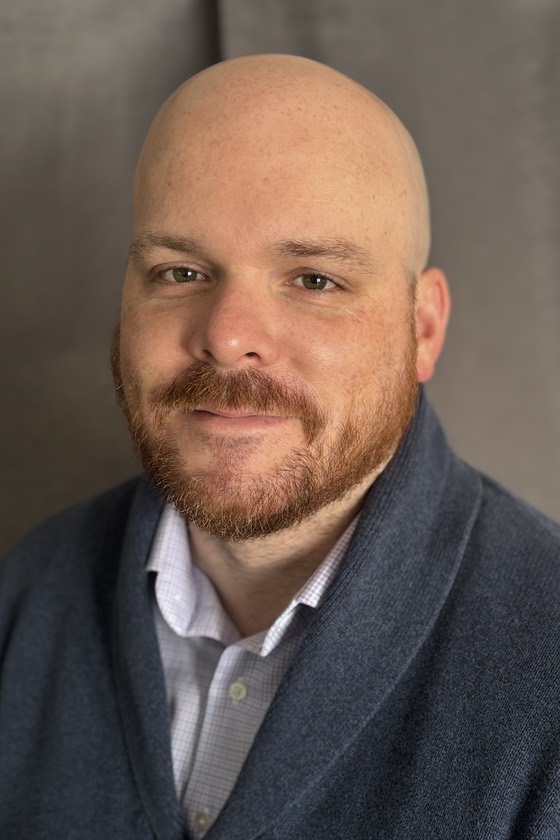
Stephen Bagwell

Assistant Professor of Political Science, University of Missouri-St. Louis
Chapter Member: Confluence SSN

About Stephen

Bagwell's research focuses on the intersection of political violence and political economy, guided by two overarching questions: are economic tools effective at promoting change in abusive government behavior, and how do economic outcomes impact the decisions and ability of groups to mobilize and dissent? Bagwell serves as a member of the Economic and Social Rights team with the Human Rights Measurement Initiative, which aims to produce metrics for government fulfillment of human rights around the world.

In the News

Opinion: "Reintegration into China Would Cost Taiwan Its Empowerment Rights," Stephen Bagwell (with Meridith LaVelle), The Loop, October 14, 2022.
Opinion: "How Far Have Human Rights in Hong Kong Eroded? We Measured.," Stephen Bagwell (with Meridith LaVelle and K. Chad Clay), Monkey Cage, The Washington Post, June 30, 2022.
Opinion: "Foreign Companies Exiting Russia Echo the Pressure Campaign Against South Africa’s Racist Apartheid System," Stephen Bagwell (with Meridith LaVelle), The Conversation, May 25, 2022.
Guest on Audacy/98.7 KMOX The Voice of St. Louis, February 25, 2022.
Guest on Audacy/98.7 KMOX The Voice of St. Louis, February 24, 2022.
Interviewed in "Tracking Rights Fulfillment in the Human Rights Measurement Initiative," (with Annie-Marie Brook, Annie Watson, Chad Clay, Elizabeth Kaletski, Matt Rains, and Susan Randolph) Human Rights Research and Data Hub Workshop, February 24, 2022.
Opinion: "Assessing The Risk Of Electoral Violence In The United States," Stephen Bagwell (with Austin C Doctor), Political Violence at A Glance, October 13, 2020.
Opinion: "Electorial Violence In Sub-Saharan Africa And Its Economic Consequences," Stephen Bagwell (with Austin C Doctor), Political Violence at A Glance, April 22, 2020.

Publications

"Of One’s Own Making: Leadership Legitimation Strategy and Human Rights" (with Matthew Rains and Meridith LaVelle). Journal of Conflict Resolution 68, no. 10 (2024): 1994-2018.

Examines data from 1991-2019 to discover the effects of personalism on human rights abuses. Finds that more personalist leaders like Bolsonaro, Erdogan, and Trump increase torture and ill-treatment in their countries by weakening institutions designed to promote human rights.

"Repudiation and Repression: The Human Costs of Sovereign Default" Social Sciences 12, no. 3 (2023): 121.

Explores how sovereign debt crises impact the ability to increase respect for human rights. Finds that defaulting on sovereign debt repayment may lead to short-term improvements in respect for rights when debt payments are a large proportion of government revenues.

"Union Rights and Inequalities" (with Skip Mark, Meridith LaVelle, and Asia Parker). Human Rights Review 24 (2023): 465-483.

Examines respect for the rights to collectively bargain and workplace association and finds that increased respect for those rights lessens different types of economic inequalities, including types known to cause political violence and civil wars.

"The Effect of the COVID-19 Pandemic on Human Rights Practices: Findings from the Human Rights Measurement Initiative’s 2021 Practitioner Survey" (with K. Chad Clay, Mennah Abdelwahab, Morgan Barney, Eduardo Burkle, Tori Hawley, Thalia Kehoe Rowden, Meridith LaVelle, Asia Parker, and Matthew Rains). Journal of Human Rights 21, no. 3 (2022).

Explores how the COVID-19 Pandemic exacerbated violations of human rights in most of the 39 countries analyzed. In particular, human rights practitioners identified violations of the rights to assembly and association, opinion and expression, and political participation as particularly likely to be violated due to COVID restrictions.

"Publicity and Perceptions of Risk: The Effects of HRO Naming and Shaming on Sovereign Credit Rating" (with Shelby L. Hall). Journal of Human Rights 19, no. 3 (2020): 379-391.

Provides evidence that naming and shaming campaigns undertaken by international human rights organizations lead to a decline in sovereign credit rating, while actual human rights abuses are not.

"Risky Business: Foreign Direct Investment and the Economic Consequences of Electoral Violence" (with Austin C Doctor). Journal of Global Security Studies 5, no. 2 (2020): 339–360.

Finds that large multinational firms are sensitive to the political risks in maintaining investments in countries which experience violence surrounding elections. Discusses they are more likely to divest from states which suffer from violent electoral processes than they are from states which experience civil war.